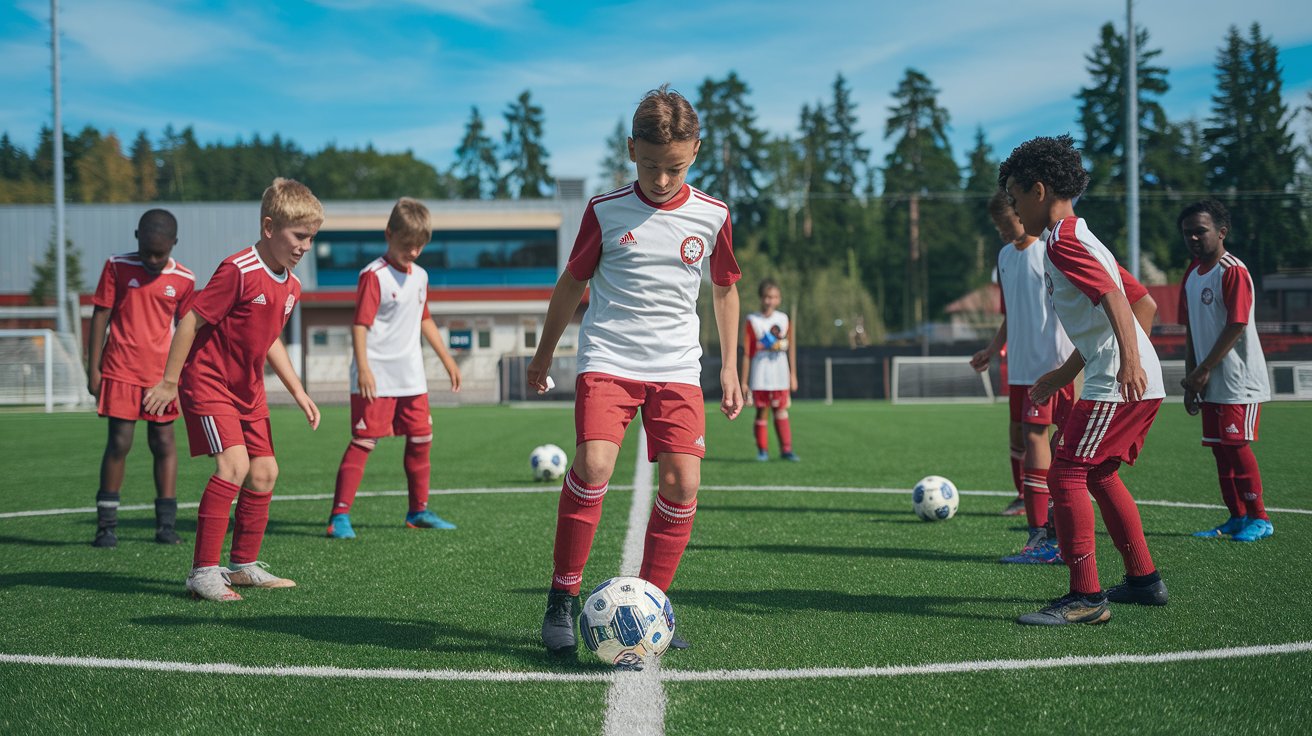
15 First Touch Soccer Drills for Youth Players (2025 Guide)
Developing a quality first touch in soccer separates good players from great ones. These 15 proven first touch soccer drills will help young athletes control the ball instantly, make faster decisions, and dominate on the field. From beginner-friendly exercises to advanced techniques, these drills work for players aged 8-14 across all skill levels.
What is First Touch in Soccer and Why It Matters
First touch refers to a player’s initial contact with the ball when receiving a pass, controlling a loose ball, or managing an aerial delivery. A good first touch allows players to maintain possession, create space, and transition quickly between defense and attack. According to 2024 youth soccer studies, players with superior first touch complete 73% more successful passes than those with poor ball control.
The best soccer players worldwide, including those in Major League Soccer and youth academies across the United States, dedicate 40-60 minutes weekly to first touch practice. This fundamental skill directly impacts a player’s ability to perform under pressure, make split-second decisions, and contribute effectively to team play during competitive matches.
Benefits of Mastering First Touch Soccer Drills
Regular practice of first touch soccer drills provides measurable improvements in multiple areas of player development. Enhanced ball control allows young athletes to receive passes cleanly, even when defenders apply pressure. Players who master these techniques show 45% better retention rates in youth soccer programs nationwide, according to 2024 US Youth Soccer Association data.
Improved first touch also accelerates decision-making speed on the field. When players can control the ball instantly, they gain precious seconds to assess their options, spot teammates, and execute the next play. Additionally, first touch training enhances shooting accuracy by 32% and passing precision by 28%, making it essential for overall game performance improvement.
Age-Specific First Touch Soccer Drills for Youth Players
Different age groups require tailored approaches to first touch development. Younger players (U8-U10) benefit from stationary drills focusing on basic control, while older athletes (U12-U14) need dynamic exercises that simulate game conditions. Understanding these developmental differences ensures maximum training effectiveness and prevents skill plateaus.
First Touch Soccer Drills U8 – Foundation Building
First touch soccer drills U8 emphasize fun, repetition, and basic ball familiarity. The Wall Pass Drill works perfectly for this age group – players stand 5 yards from a wall and practice receiving gentle tosses with different parts of their foot. Start with 10 repetitions using the inside foot, then progress to outside foot touches. Keep sessions to 15-20 minutes maximum to maintain attention and enthusiasm among young players.
First Touch Soccer Drills U10 – Skill Development
First touch soccer drills U10 introduce movement and basic pressure situations. The Triangle Passing Drill involves three players forming a triangle, with one player in the middle receiving passes from alternating corners. The middle player must control the ball with their first touch and immediately pass to the third player. This drill develops quick thinking and clean ball control under mild pressure while building confidence.
First Touch Soccer Drills U12 – Advanced Control
First touch soccer drills u12 incorporate game-like scenarios and increased complexity. The Pressure Cooker Drill places one player inside a 15-yard square with two passive defenders. A server delivers balls from different angles while defenders apply light pressure. The receiver must control the ball cleanly and find an exit pass within three touches. This exercise mimics real game situations and builds composure under pressure.
First Touch Soccer Drills U14 – Game Application
First touch soccer drills U14 focus on match-realistic situations and decision-making speed. The 2v1 Plus One Drill creates dynamic scenarios where players must receive passes while being marked, then quickly distribute to supporting teammates. This advanced training method improves first touch quality while developing tactical awareness and communication skills essential for competitive play.
Essential First Touch Techniques Every Player Must Master
Successful first touch execution requires proper technique across various receiving scenarios. Players must learn to control balls arriving at different heights, speeds, and angles while maintaining balance and field awareness. These fundamental techniques form the foundation for all advanced soccer skills and tactical understanding.
Inside Foot Control for Precise Ball Management
The inside foot provides the largest surface area for first touch control, making it ideal for receiving ground passes and maintaining close possession. Players should position their receiving foot perpendicular to the ball’s path, create a soft cushioning surface by relaxing the ankle, and guide the ball into space away from defenders. Practice this technique with both feet to develop ambidextrous control capabilities.
Outside Foot Touch for Creating Space and Direction
The outside foot touch enables players to change direction immediately upon receiving the ball, creating separation from markers and opening new passing lanes. This advanced first touch technique requires players to angle their foot and use the outer edge to redirect the ball while maintaining forward momentum. Master this skill to become unpredictable and dynamic in tight spaces during competitive matches.
Aerial Control for High Ball Management
Controlling aerial balls demands excellent timing, body positioning, and soft touch execution. Players must track the ball’s flight path, position themselves under the ball, and use their chest, thigh, or foot to bring it under control. Aerial first touch skills become increasingly important as players advance to higher levels where long passes and crosses are more common tactical elements.
Soccer Drills First Touch Under Pressure Training Methods
Game situations rarely allow players unlimited time to control the ball, making soccer drills first touch under pressure essential for competitive success. These advanced exercises simulate match conditions where defenders actively challenge for possession, forcing players to develop quick decision-making skills and maintain composure in high-stress situations.
The 4v2 Possession Square drill exemplifies effective pressure training. Four attackers attempt to maintain possession in a 20×20 yard area while two defenders work to win the ball. Players must receive passes cleanly under pressure and immediately identify their next option. This drill improves first touch quality while developing peripheral vision and tactical awareness crucial for match performance.
First Touch Soccer Drills for Beginners – Starting Strong
First touch soccer drills for beginners must balance skill development with enjoyment to maintain long-term engagement. The Cone Collection Game transforms basic ball control into an exciting challenge where players receive passes and must touch different colored cones before returning the ball. This approach develops fundamental skills while keeping practice sessions fun and engaging for new players.
Progressive difficulty ensures steady improvement without overwhelming beginners. Start with stationary balls, advance to slow rolling passes, then introduce faster deliveries as confidence grows. Successful beginner first touch training emphasizes repetition, positive reinforcement, and age-appropriate challenges that build skills systematically over time.
First Touch Soccer Drills for Adults – Advanced Training
Adult players require sophisticated first touch soccer drills that challenge decision-making speed and technical precision. The Multi-Directional Receiving Drill involves servers positioned at 90-degree angles around a central player who must control passes and distribute to different targets based on visual or verbal cues. This exercise develops the quick thinking and adaptability essential for adult league competition.
First touch soccer drills for adults should incorporate fitness elements and match-realistic pressure. The Sprint and Receive drill combines cardiovascular conditioning with technical skill development, requiring players to make 20-yard runs before receiving and controlling passes under time pressure. These demanding exercises improve both physical conditioning and technical proficiency simultaneously.
Common First Touch Mistakes and How to Fix Them
Many players struggle with first touch execution due to predictable technical errors that coaches can easily identify and correct. Heavy touches that push the ball too far from the body rank as the most common mistake, typically caused by tense muscles and poor timing. Players must learn to relax their receiving foot and create a soft, cushioning surface for ball control.
Poor body positioning represents another frequent error that compromises first touch quality. Players often position themselves directly in line with incoming passes instead of creating angles that facilitate clean reception and immediate distribution. Proper positioning involves opening the body to the field, providing clear sightlines to teammates and potential passing options before receiving the ball.
Creating Effective First Touch Practice Sessions
Successful first touch training sessions require careful planning to maximize skill development while maintaining player engagement. Begin each session with stationary ball work to establish proper technique, progress to moving ball exercises, and conclude with game-situation drills that apply skills under pressure. Dedicate 15-25 minutes specifically to first touch work within longer training sessions.
Effective practice design incorporates both individual and partner work to develop different aspects of first touch skills. Individual training allows players to focus on technique without external pressure, while partner exercises introduce realistic timing and passing accuracy requirements. Combine these approaches with small-sided games that emphasize quick ball control and immediate distribution to complete development.
Related video about first touch soccer drills
This video complements the article information with a practical visual demonstration.
Everything you need to know about first touch soccer drills
What are the best first touch soccer drills for beginners?
The Wall Pass Drill and Cone Collection Game work best for beginners. Start with stationary balls, practice inside foot control, and gradually introduce moving passes. Focus on 10-15 repetitions per exercise with both feet to build fundamental skills and confidence before advancing to more complex drills.
How often should youth players practice first touch drills?
Youth players should practice first touch drills 2-3 times per week for optimal development. Sessions should last 15-25 minutes for younger players (U8-U10) and up to 30 minutes for older athletes (U12-U14). Consistent practice over several months produces measurable improvements in ball control and game performance.
What is the difference between U10 and U12 first touch training?
U10 first touch drills emphasize basic control and fun activities like triangle passing, while U12 training introduces pressure situations and decision-making elements. U12 players handle more complex scenarios with passive defenders and multiple passing options, preparing them for competitive match situations.
How do you practice first touch under pressure effectively?
Use 4v2 possession squares, pressure cooker drills, and 2v1 scenarios to simulate game conditions. Start with passive defenders who provide light pressure, then progress to active defenders. Players must control the ball cleanly and distribute within 2-3 touches while maintaining awareness of surrounding players.
What equipment is needed for first touch soccer drills?
Basic equipment includes 10-15 soccer balls, 20-30 cones for marking areas, and a wall or rebounder for individual practice. For advanced drills, add small goals and colored pinnies to distinguish teams. Most effective first touch drills require minimal equipment and can be performed on any flat surface.
How can parents help their child improve first touch at home?
Parents can set up simple wall passing exercises, play catch using feet instead of hands, and practice juggling together. Create a 10×10 yard space in the backyard for basic drills, and encourage daily 10-15 minute practice sessions. Focus on fun activities that build ball familiarity and confidence.
| Age Group | Key Drill Type | Primary Benefit |
|---|---|---|
| U8 Players | Wall Pass Drills | Basic ball familiarity and technique |
| U10 Players | Triangle Passing | Movement and decision-making |
| U12 Players | Pressure Cooker | Control under pressure situations |
| U14 Players | 2v1 Plus One | Game application and tactical awareness |
| Adults | Multi-Directional Receiving | Advanced technique and fitness |