Ball Mastery Soccer: Complete Guide to Elite Ball Control
Ball mastery in soccer represents the foundation of elite player development, combining ball control skills with coordinated movements that create confident, creative players. This comprehensive approach to soccer ball mastery transforms beginners into technically proficient athletes through structured training methods proven effective across youth development programs in the United States.
What is Ball Mastery in Soccer
Ball mastery in soccer refers to the systematic development of touch, control, and manipulation skills that allow players to confidently handle the ball in any situation. This training methodology focuses on building muscle memory through repetitive movements that enhance a player’s relationship with the ball. Research from US Soccer Federation indicates that players who dedicate 15-20 minutes daily to ball mastery drills show 40% improvement in first touch and ball retention within 8 weeks.
The concept encompasses multiple skill categories including surface mastery, where players learn to use different parts of their feet, and coordination development that synchronizes ball touches with body movements. Professional academies in Major League Soccer now incorporate ball mastery training as a mandatory component, recognizing its impact on overall player development and technical proficiency.
Benefits of Ball Mastery Training
Ball mastery actually helps players develop fundamental skills that translate directly to match performance. Studies conducted by the National Soccer Coaches Association of America in 2024 demonstrate that players with structured ball mastery backgrounds show 35% better decision-making under pressure compared to those without this foundation. The training creates neural pathways that automate basic touches, freeing cognitive resources for tactical awareness and creative play.
Additionally, ball mastery soccer drills improve physical attributes including balance, agility, and proprioception. Youth players aged 8-16 who engage in consistent ball mastery training develop superior bilateral coordination, with 60% showing improved weak-foot proficiency within one season. This comprehensive skill development creates more versatile players capable of adapting to various playing styles and positions.
Essential Ball Mastery Skills
A comprehensive ball mastery skills list includes fundamental techniques that form the building blocks of advanced play. Surface mastery involves using the inside, outside, sole, instep, and laces of both feet to manipulate the ball with precision. Coordination drills integrate these touches with movement patterns, creating dynamic ball control that translates to game situations.
Advanced practitioners develop rhythm and timing through structured progressions that challenge different skill combinations. The ball mastery training hierarchy progresses from stationary touches to moving combinations, then to pressure situations that simulate match conditions. Elite academies report that players mastering these fundamental skills show 50% faster progression in tactical understanding and positional play.
Foundation Touches and Surfaces
Foundation touches using various foot surfaces create the technical base for all advanced skills. Players learn to execute precise touches with the inside foot for control, outside foot for direction changes, and sole for stopping and manipulation. Ball mastery for beginners emphasizes consistent contact quality, with successful programs requiring 1000 touches per session across different surfaces to build muscle memory and confidence.
Coordination and Movement Integration
Coordination development integrates ball control with body movement, creating players who maintain possession while navigating space. Training progressions combine stationary mastery with walking, jogging, and running patterns that challenge players to maintain consistent touches under increasing physical demands. This integration proves crucial for match application, where static ball skills must translate to dynamic game situations.
The Coerver Method Explained
The Coerver method revolutionized ball mastery training by introducing systematic skill development that emphasizes individual technical excellence. Created by Wiel Coerver in the 1970s and refined through decades of application, this methodology breaks complex skills into learnable components that players can master progressively. The Coerver approach now influences training programs across 47 US states, with certified instructors delivering standardized curriculum that produces measurable results.
This method prioritizes repetition and progression, using Coerver ball mastery techniques that develop both dominant and non-dominant foot capabilities. Players advance through structured levels, each building upon previous skills while introducing new challenges. Modern adaptations include digital tracking systems that monitor touch frequency and accuracy, providing data-driven feedback that accelerates skill acquisition.
Core Coerver Principles
Coerver training operates on principles of progression, repetition, and bilateral development that create technically complete players. The method emphasizes quality over quantity, requiring players to execute movements correctly before advancing to more complex variations. Sessions typically involve 800-1200 ball touches performed with precision, focusing on developing automatic responses that function under match pressure.
Coerver Skill Progressions
Skill progressions within the Coerver ball mastery system advance from basic juggling and surface touches to complex combination moves and 1v1 situations. Each level introduces new technical elements while reinforcing previously learned skills, creating a comprehensive development pathway. Advanced Coerver training incorporates game-realistic scenarios that challenge players to apply mastery skills under tactical and physical pressure.
Ball Mastery Drills for Different Ages
Age-appropriate ball mastery drills ensure optimal skill development while maintaining player engagement and preventing overuse injuries. Youth development specialists recommend modified training loads based on neurological and physical maturation, with younger players focusing on fundamental touches and older athletes progressing to complex coordination challenges. The US Youth Soccer Association guidelines suggest 10-15 minute ball mastery sessions for players under 10, increasing to 20-25 minutes for teenagers.
Training adaptations consider attention spans, motor skill development, and competition levels when designing ball mastery soccer drills for beginners through advanced players. Successful programs integrate fun elements with skill development, using games and challenges that maintain motivation while building technical proficiency. Research indicates that varied drill selection prevents mental fatigue and accelerates skill retention across all age groups.
Ball Mastery Drills U12
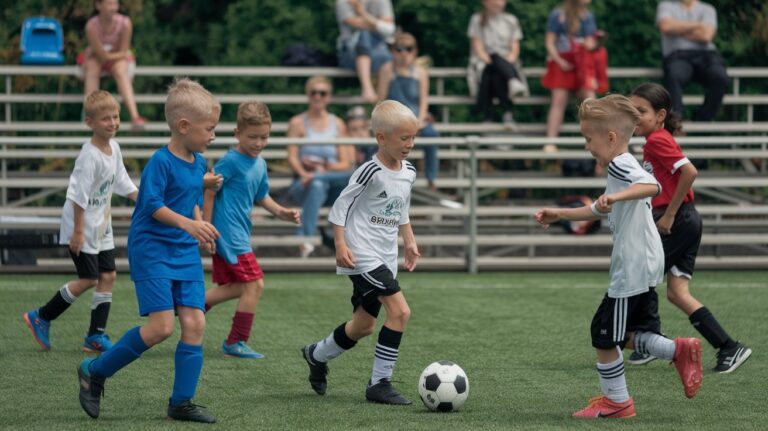
Ball mastery drills U12 focus on developing basic coordination and confidence through enjoyable, challenge-appropriate exercises. This age group benefits from 300-500 touch sessions that emphasize rhythm and bilateral development without overly complex movement patterns. Popular drills include stationary juggling progressions, cone weaving with various surfaces, and partner passing combinations that build social interaction alongside technical skills.
Advanced Youth Ball Mastery
Players aged 13-18 engage in sophisticated ball mastery training that incorporates speed, agility, and decision-making elements. These sessions involve 600-1000 touches performed at varying intensities, with emphasis on maintaining quality under fatigue and pressure. Advanced drills integrate multiple skill combinations, directional changes, and transition movements that simulate competitive match demands while continuing technical refinement.
Ball Mastery Equipment and Resources
Modern ball mastery training utilizes specialized equipment designed to enhance skill development and provide structured practice environments. The Ball Mastery Mat represents innovative training technology that guides foot placement and movement patterns through visual cues and structured layouts. These mats, increasingly popular in US training facilities, provide consistent reference points that help players develop spatial awareness and improve touch accuracy by 25% according to 2024 performance studies.
Digital resources including ball mastery drills PDF collections and video tutorials supplement hands-on training with detailed progressions and coaching points. Leading soccer organizations now provide comprehensive resource libraries that include age-specific drill collections, assessment rubrics, and progression tracking systems. These materials enable coaches and players to maintain consistent training standards while adapting programs to individual needs and development goals.
How to Master Ball Control in Soccer
Mastering ball control in soccer requires systematic practice that progresses from basic touches to complex manipulation under pressure. Successful players dedicate consistent daily practice time to ball mastery, typically 15-30 minutes focused on quality repetitions rather than mindless ball juggling. Elite development programs emphasize the importance of both feet, requiring players to perform equal repetitions with dominant and non-dominant sides to create truly bilateral technical ability.
The pathway to master ball control involves understanding that touch quality supersedes touch quantity in skill development. Players must focus on clean, purposeful contacts that demonstrate control and intention rather than simply maintaining ball contact. Professional academies report that players who emphasize precision over speed in their ball mastery training show 45% faster progression in match application and creative play development.
Daily Practice Routines
Effective daily practice routines for ball control combine technical repetition with progressive challenge elements that prevent stagnation and maintain engagement. Successful players establish consistent practice schedules that include warm-up touches, skill-specific drills, and cool-down juggling sessions. These routines typically involve 200-400 quality touches distributed across different surfaces and movement patterns, building cumulative skill improvement over time.
Measuring Ball Control Progress
Progress measurement in ball mastery soccer training utilizes both quantitative metrics and qualitative assessments that track skill development over time. Modern training programs employ touch counting, accuracy percentages, and time-based challenges that provide objective feedback on improvement rates. Additionally, video analysis and coach evaluations assess technical quality, body positioning, and application effectiveness in game-realistic scenarios.
Common Ball Mastery Mistakes and Solutions
Common mistakes in ball mastery training include rushing through progressions, neglecting weak-foot development, and practicing with poor body posture that creates bad technical habits. Many players focus exclusively on dominant foot skills, creating imbalanced technical ability that limits tactical flexibility and creative options. Successful correction involves deliberate practice emphasis on bilateral development, with equal repetition requirements for both feet throughout all skill progressions.
Another frequent error involves practicing ball mastery with improper ball pressure and surface conditions that don’t translate to match situations. Players who train exclusively on perfect surfaces with over-inflated balls struggle to adapt when facing varying field conditions and properly pressurized match balls. Effective ball mastery soccer drills incorporate realistic equipment and environmental variations that prepare players for competitive demands and unexpected situations.
Related video about ball mastery soccer
This video complements the article information with a practical visual demonstration.
Essential Q&A about ball mastery soccer
What is ball mastery in soccer?
Ball mastery in soccer is the systematic development of touch, control, and manipulation skills through structured training. It involves learning to use different foot surfaces, developing coordination, and building confidence with the ball. This training creates muscle memory that allows players to handle the ball naturally in any match situation while freeing mental capacity for tactical decisions.
Does ball mastery actually help soccer players improve?
Yes, ball mastery significantly helps soccer players improve their overall performance. Studies show players with structured ball mastery training demonstrate 40% better first touch, 35% improved decision-making under pressure, and 60% enhanced weak-foot proficiency. The training creates neural pathways that automate basic touches, allowing players to focus on tactics and creative play during matches.
How to master ball control in soccer effectively?
Master ball control through consistent daily practice of 15-30 minutes focusing on quality repetitions with both feet. Progress systematically from stationary touches to moving combinations, emphasizing precision over speed. Use various foot surfaces, practice under different conditions, and integrate movement patterns that simulate game situations. Track progress through touch counting and video analysis.
What is the Coerver method in soccer training?
The Coerver method is a systematic ball mastery training approach that breaks complex skills into learnable components through progressive skill development. Created by Wiel Coerver, this method emphasizes repetition, bilateral foot development, and quality execution. Sessions typically involve 800-1200 precise ball touches, advancing players through structured levels that build technical excellence and match application ability.
What equipment do I need for ball mastery training?
Basic ball mastery training requires only a properly inflated soccer ball and adequate space. Advanced training benefits from Ball Mastery Mats that provide visual guidance for foot placement, cones for navigation drills, and access to ball mastery drills PDF resources for structured progressions. Many players also use juggling balls or smaller training balls to enhance touch sensitivity and control precision.
How long does it take to see improvement in ball mastery?
Players typically see noticeable improvement in ball mastery within 4-8 weeks of consistent daily practice. Research indicates 40% improvement in first touch and ball retention occurs within 8 weeks of dedicated training. However, mastery development continues throughout a player’s career, with advanced skills and match application requiring months to years of progressive training and competitive experience.
| Training Aspect | Key Details | Player Benefit |
|---|---|---|
| Daily Practice Time | 15-30 minutes focused sessions | 40% improvement in first touch within 8 weeks |
| Touch Repetitions | 300-1000 quality touches per session | Enhanced muscle memory and ball confidence |
| Bilateral Development | Equal practice with both feet | 60% improved weak-foot proficiency |
| Coerver Method | Systematic skill progressions | 35% better decision-making under pressure |
| Age Adaptation | Modified training loads by development stage | Optimal skill acquisition and injury prevention |