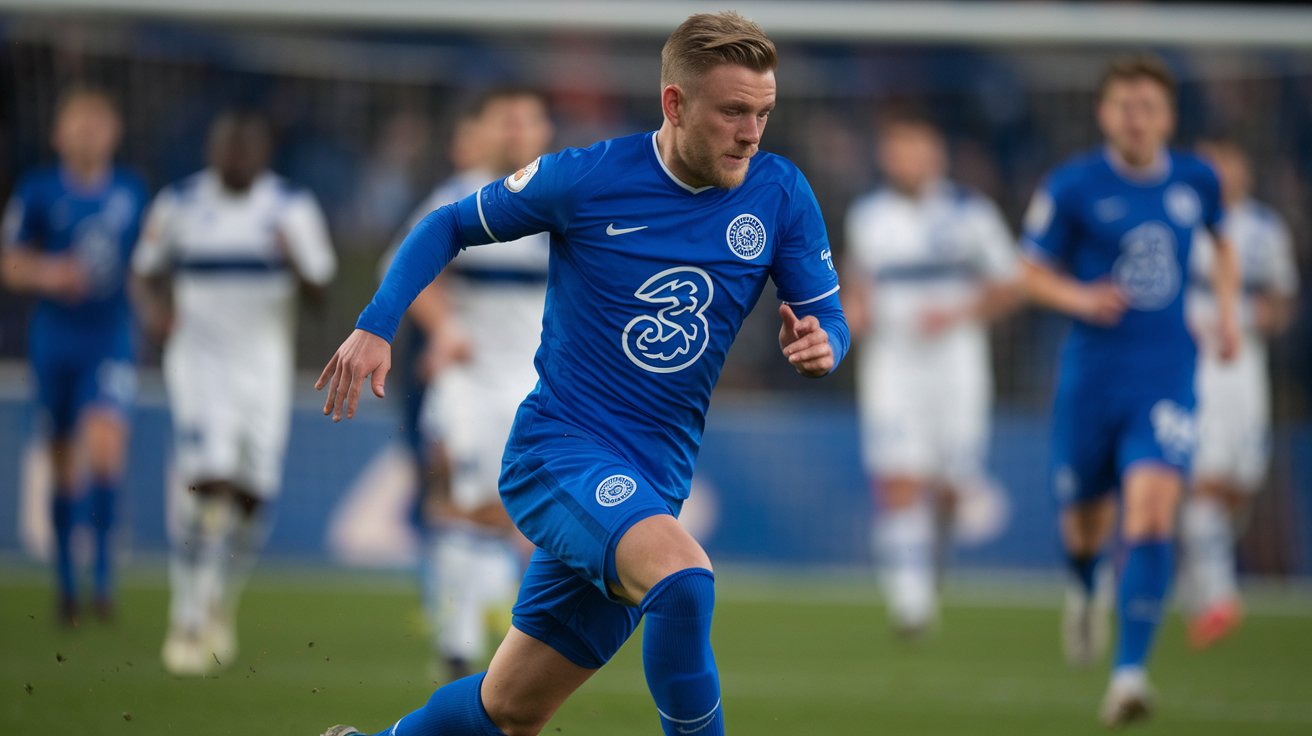
Soccer Player Requirements: Complete Guide to Going Pro 2025
Understanding the comprehensive soccer player requirements is crucial for anyone aspiring to play professionally in the United States. Modern soccer demands a unique combination of technical skills, physical attributes, mental toughness, and educational background that varies significantly based on your career goals and level of play.
Essential Physical Requirements for Soccer Players
Professional soccer players must meet specific physical standards that have evolved significantly in 2024-2025. The average professional soccer player in Major League Soccer (MLS) stands between 5’9″ and 6’1″ and maintains a body fat percentage between 8-12%. These physical characteristics enable optimal performance across 90-minute matches while maintaining speed and agility throughout the game.
Cardiovascular endurance remains the most critical physical requirement, as players typically cover 7-9 miles per match at varying intensities. Professional soccer players must achieve a VO2 max of at least 55-65 ml/kg/min, significantly higher than average fitness levels. Strength training has become increasingly important, with players expected to demonstrate explosive power for sprinting, jumping, and ball striking while maintaining lean muscle mass.
Speed and Agility Standards
Modern soccer player requirements include achieving a 40-yard dash time under 5.0 seconds for field players and demonstrating exceptional agility through cone drills and directional changes. Professional academies now test players using GPS tracking data to measure acceleration, deceleration, and change of direction capabilities during actual gameplay scenarios.
Injury Prevention and Recovery
Professional soccer players must maintain injury-free status through proper conditioning and recovery protocols. This includes flexibility standards, core strength assessments, and the ability to perform sport-specific movements without compensation patterns. Recovery metrics such as sleep quality, nutrition compliance, and stress management have become integral parts of professional soccer player requirements.
Technical Skills and Ball Mastery Requirements
Technical excellence forms the foundation of all soccer player requirements, with professional standards becoming increasingly demanding in 2024-2025. Players must demonstrate mastery of both feet through passing accuracy tests, typically achieving 85% or higher completion rates under pressure. Ball control skills include first-touch proficiency, juggling endurance, and the ability to receive passes from multiple angles while maintaining possession.
Shooting accuracy and power represent crucial technical benchmarks, with professional soccer players expected to generate shot speeds exceeding 70 mph while maintaining precision. Modern training programs emphasize technical skill development under fatigue and pressure conditions, simulating match-realistic scenarios where technique must remain consistent despite physical and mental stress.
Passing and Vision Development
Advanced soccer players must demonstrate exceptional passing range and vision, including short-range accuracy (95% within 15 yards), medium-range precision (80% within 30 yards), and long-range distribution capabilities. Vision training now incorporates cognitive assessment tools that measure decision-making speed and spatial awareness under game-like conditions.
Defensive Technical Requirements
Defensive soccer player requirements include tackle success rates above 70%, aerial duel win percentages exceeding 60%, and interception capabilities that demonstrate reading the game effectively. Modern defenders must also possess technical skills for ball distribution and building attacks from the back, making them complete players rather than purely defensive specialists.
Educational Requirements and Academic Pathways
The education needed to become a soccer player varies significantly based on your chosen pathway, but maintaining academic excellence provides crucial backup options and enhances overall development. High school soccer players aiming for collegiate programs must maintain a minimum GPA of 2.3 for Division I eligibility, though competitive programs typically require 3.0 or higher for meaningful scholarship consideration.
College soccer programs offer the most structured path for American players, with NCAA Division I requirements to play D1 soccer including specific academic standards, standardized test scores, and soccer skill assessments. Student-athletes must complete 16 core courses in high school, achieve qualifying SAT/ACT scores, and maintain continuous academic progress throughout their collegiate career while pursuing degrees in various fields.
Mental Toughness and Game Intelligence
Modern soccer player requirements heavily emphasize mental attributes that separate good players from exceptional ones. Game intelligence encompasses tactical awareness, decision-making under pressure, and the ability to read complex match situations quickly. Professional clubs now use cognitive testing and psychological assessments to evaluate players’ mental resilience, focus capabilities, and leadership potential.
Mental toughness manifests through consistent performance under pressure, recovering from mistakes quickly, and maintaining confidence during challenging periods. Professional soccer players must demonstrate emotional regulation, stress management, and the ability to perform at peak levels regardless of external circumstances such as crowd noise, referee decisions, or match importance.
Tactical Understanding and Adaptability
Advanced game intelligence requires understanding multiple formations, positional responsibilities, and tactical systems. Players must adapt quickly to in-game tactical changes and demonstrate versatility across different positions when required. Modern soccer demands players who can think strategically while executing technical skills at high speeds.
Leadership and Communication Skills
Leadership qualities have become essential soccer player requirements at professional levels, including verbal and non-verbal communication during matches, motivating teammates during difficult moments, and setting positive examples through work ethic and behavior. These soft skills often determine playing time and career advancement opportunities.
Age-Specific Development Requirements
Understanding age-appropriate development stages is crucial for meeting long-term soccer player requirements. Players beginning their journey at 12-15 years old must focus on fundamental skills, enjoyment, and gradual physical development rather than intense specialization. How to become a professional soccer player at 15 involves joining competitive club teams, attending regional camps, and maintaining consistent training schedules while balancing academic responsibilities.
For older teenagers, how to become a professional soccer player at 16 requires more intensive training, showcase participation, and college recruitment preparation. Late developers can still achieve professional success through dedicated training, but must accelerate skill acquisition and physical development to catch up with early specializers who have been training intensively for years.
Professional Career Pathways and Salary Expectations
What does a soccer player do professionally extends beyond match performance to include training sessions, media obligations, community appearances, and continuous skill development. Professional players typically train 6-8 hours daily, including technical sessions, physical conditioning, tactical preparation, and recovery protocols. The career demands exceptional time management and lifestyle discipline.
Soccer player career salary varies dramatically based on level and location, with MLS minimum salaries starting around $65,000 annually in 2024, while top players earn millions. USL Championship players typically earn $40,000-$60,000 annually, while lower division players often supplement income through coaching or other employment. Understanding these financial realities helps set appropriate expectations for professional soccer careers.
Training Facilities and Study Locations
Where to study to become a soccer player includes various institutional options across the United States. Major universities with strong soccer programs include Stanford, UCLA, North Carolina, and Indiana, offering excellent academic-athletic combinations. Professional development academies operated by MLS clubs provide direct pathways to professional contracts but require geographic relocation and intensive commitment.
Regional Olympic Development Programs (ODP) and Elite Clubs National League (ECNL) provide high-level training environments for serious players. IMG Academy in Florida and other specialized soccer boarding schools offer comprehensive programs combining education with professional-level training, though costs can exceed $70,000 annually for full residential programs.
Nutrition and Lifestyle Requirements
Modern professional soccer player requirements include strict nutritional discipline and lifestyle management that directly impacts performance and career longevity. Players must maintain optimal body composition through carefully planned nutrition, typically consuming 3,000-4,000 calories daily with specific macronutrient ratios. Hydration protocols, supplement usage, and meal timing around training and matches require professional guidance.
Sleep optimization has become a crucial component of soccer player requirements, with professionals averaging 8-9 hours nightly and utilizing recovery technologies such as compression therapy, cryotherapy, and massage therapy. Alcohol consumption, social media management, and personal relationship decisions all impact professional soccer careers and require careful consideration.
Related video about soccer player requirements
This video complements the article information with a practical visual demonstration.
Important things to know about soccer player requirements
What do you need to be a soccer player?
To become a soccer player, you need excellent physical fitness, technical ball skills, tactical understanding, mental toughness, and dedication to continuous improvement. Physical requirements include cardiovascular endurance, speed, agility, and strength. Technical skills encompass ball control, passing accuracy, shooting ability, and defensive capabilities. Mental attributes include game intelligence, decision-making under pressure, and emotional resilience.
What education is needed to become a soccer player?
While formal education isn’t strictly required for professional soccer, most successful American players complete high school and often attend college. NCAA Division I programs require a minimum 2.3 GPA and completion of 16 core courses. College soccer provides development opportunities, networking, and backup career options. Many professional players earn degrees in sports management, business, or communications to prepare for post-playing careers.
What are the requirements to play D1 soccer?
D1 soccer requirements include maintaining academic eligibility with a minimum 2.3 GPA, completing 16 core high school courses, achieving qualifying SAT/ACT scores, and demonstrating exceptional soccer skills. Players must register with NCAA Eligibility Center, pass background checks, and maintain amateur status. Athletic scholarships are limited, with most programs offering partial scholarships rather than full rides.
What are the physical characteristics of a soccer player?
Professional soccer players typically maintain 8-12% body fat, achieve VO2 max levels of 55-65 ml/kg/min, and demonstrate exceptional cardiovascular endurance covering 7-9 miles per match. Speed requirements include 40-yard dash times under 5.0 seconds, while strength training focuses on explosive power for jumping, sprinting, and ball striking. Flexibility, agility, and injury prevention through proper conditioning are equally important physical characteristics.
How much do professional soccer players earn?
Professional soccer salaries vary widely by level and location. MLS minimum salaries start around $65,000 annually in 2024, with top players earning millions. USL Championship players typically earn $40,000-$60,000 annually, while lower divisions often require supplemental income. European opportunities may offer higher salaries but require exceptional skill levels and visa considerations for American players.
Can you become a professional soccer player after age 16?
Yes, becoming a professional soccer player after 16 is possible but requires accelerated development and exceptional dedication. Late bloomers must focus intensively on skill development, physical conditioning, and tactical understanding while seeking exposure through showcases, college programs, or semi-professional leagues. Many professional players didn’t reach elite levels until their late teens or early twenties through persistent improvement and opportunity recognition.
| Requirement Category | Key Standards | Career Impact |
|---|---|---|
| Physical Fitness | VO2 max 55-65 ml/kg/min, <5.0s 40-yard dash | Determines match endurance and competitive level |
| Technical Skills | 85% passing accuracy, ambidextrous ball control | Foundation for all tactical execution and creativity |
| Education | High school completion, 2.3+ GPA for D1 | Opens college pathways and career alternatives |
| Mental Toughness | Pressure performance, quick recovery from mistakes | Separates good players from professional level |
| Age Development | Progressive skill building, competitive exposure | Maximizes potential and recruitment opportunities |