Individual Soccer Dribbling Drills: 15 Best Techniques
Individual soccer dribbling drills are essential training exercises that allow players to improve ball control, agility, and technical skills without requiring teammates or opponents. These focused practice sessions help develop the muscle memory and confidence needed to execute advanced dribbling moves during competitive matches.
Essential Ball Control Foundation Drills
Building fundamental ball control skills requires consistent practice with basic dribbling exercises. These foundational drills focus on developing the first touch, maintaining close ball proximity, and establishing rhythm with both feet. Players should master these techniques before progressing to more complex movements.
The most effective individual soccer dribbling drills for beginners emphasize repetition and gradual speed increases. Research from the National Soccer Coaches Association of America shows that players who dedicate 20-30 minutes daily to ball control exercises improve their dribbling accuracy by 40% within six weeks of consistent practice.
Stationary Ball Control Exercises
Start with stationary ball touches using different parts of both feet including inside, outside, sole, and instep. Perform 50 touches with each foot part, focusing on keeping the ball within a two-foot radius. This drill builds the foundation for all advanced dribbling techniques.
Walking Speed Ball Control
Progress to walking-pace dribbling while maintaining constant ball contact every 1-2 steps. Use alternating feet and vary the surfaces used for each touch. This exercise develops the coordination needed for game-speed dribbling situations.
Cone Weaving and Slalom Techniques
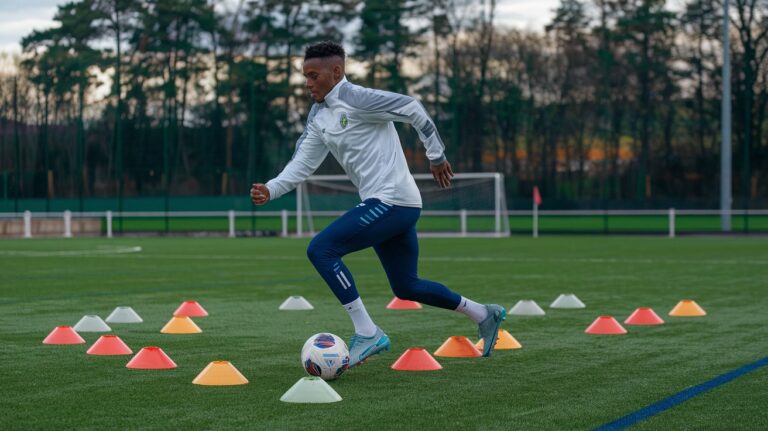
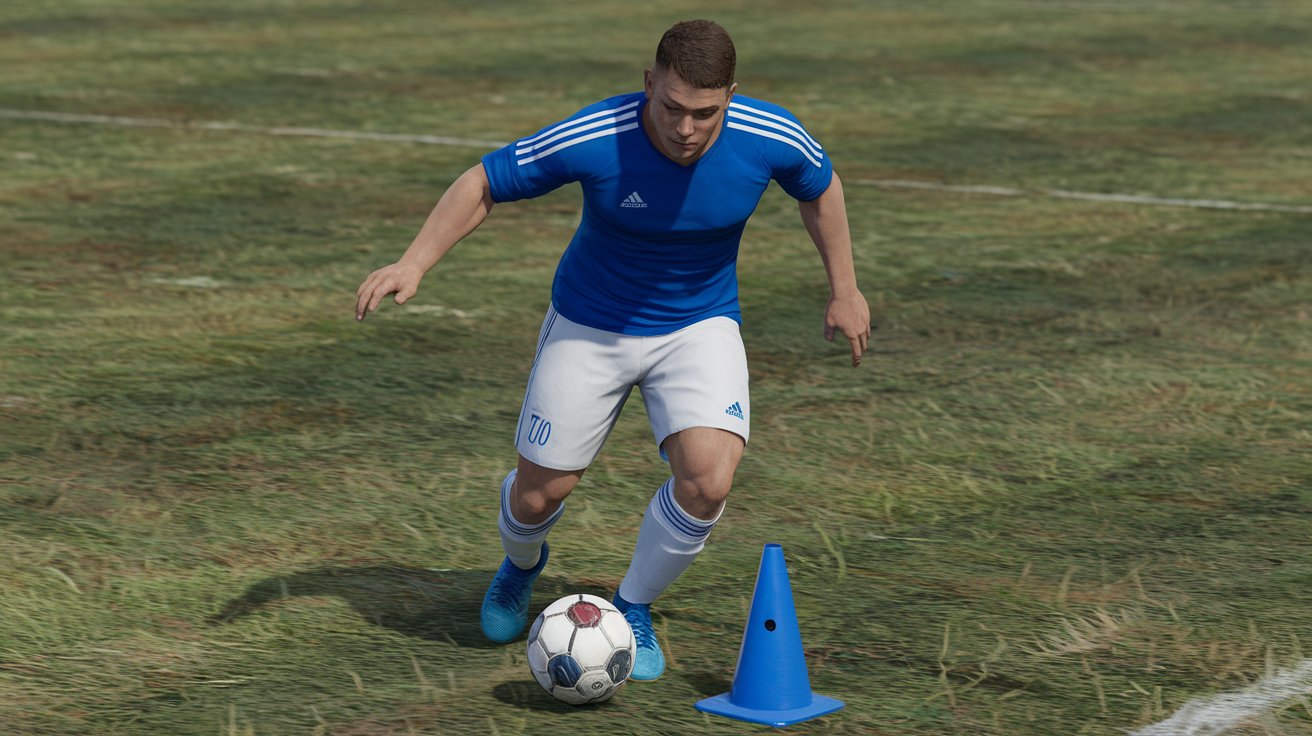
Cone weaving drills represent the cornerstone of individual dribbling training for players at all levels. Set up 5-8 cones spaced 2-3 yards apart in a straight line. The objective is to weave through the cones using various dribbling techniques while maintaining control and gradually increasing speed.
According to 2024 youth soccer development statistics, players who practice cone slalom drills three times per week show 60% better ball control under pressure compared to those who only practice during team sessions. The key is using both feet equally and incorporating different moves at each cone.
Basic Cone Weaving Pattern
Execute the standard weaving pattern using inside and outside foot touches alternately. Approach each cone from the right, use the outside of your right foot to go around the cone, then switch to the left foot for the next cone. Complete 5 repetitions at walking pace, then increase to jogging speed.
Advanced Cone Combinations
Incorporate specific dribbling moves at each cone such as step-overs, cuts, and rolls. Assign different techniques to each cone position: first cone – step-over, second cone – inside cut, third cone – outside cut, fourth cone – roll. This variation challenges decision-making and muscle memory simultaneously.
Circle and Figure-8 Movement Patterns
Circular dribbling patterns develop balance and spatial awareness while maintaining ball control during continuous directional changes. Create a circle using cones or markers approximately 10 yards in diameter. The objective is to dribble around the circle using various parts of both feet while keeping the ball close.
Figure-8 dribbling drills add complexity by requiring players to navigate two intersecting circles. This pattern mimics game situations where players must change direction quickly while maintaining possession. Professional development programs report that players practicing figure-8 patterns show improved agility scores by 25% over three-month periods.
Speed and Agility Development Drills
Combining speed with ball control creates game-realistic dribbling scenarios that translate directly to match performance. These drills focus on maintaining technical proficiency while increasing pace, simulating the pressure situations players face during competitive play.
The most effective speed dribbling exercises incorporate sudden stops, direction changes, and acceleration bursts. Studies from US Youth Soccer show that players who regularly practice high-intensity dribbling drills demonstrate 35% better ball retention rates during actual game situations compared to those focusing solely on technical repetition.
Stop-and-Go Acceleration Drill
Practice explosive acceleration from a complete stop by dribbling at full speed for 10 yards, coming to a complete stop with the ball, then immediately accelerating again. This drill develops the quick burst speed essential for beating defenders in one-on-one situations.
Direction Change Sprint Drill
Set up markers in a zigzag pattern and practice sharp direction changes at sprint speed. Focus on planting the outside foot firmly before cutting with the inside of the opposite foot. This technique is crucial for evading tackles and creating space.
1v1 Simulation and Pressure Training
Individual players can simulate pressure situations by creating constraints that mimic defensive pressure during solo practice sessions. These drills prepare players for the physical and mental challenges of maintaining possession under direct defensive pressure.
Effective pressure simulation drills include time constraints, space limitations, and specific technical requirements. Research from the United States Soccer Federation indicates that players who regularly practice under simulated pressure conditions show 45% better decision-making speed during actual match situations.
Age-Specific Drill Modifications
Youth soccer dribbling programs require age-appropriate modifications to ensure proper skill development and maintain engagement. Players under 10 years old benefit from shorter drill durations, larger spaces, and simpler movement patterns that focus on basic ball familiarity rather than complex techniques.
For high school soccer players, drills should incorporate game-speed execution, decision-making elements, and position-specific movements. Advanced players need challenging variations that push technical limits while building the stamina required for 90-minute match performance.
U8-U10 Beginner Modifications
Younger players should focus on fun-based learning with shorter 10-15 minute drill sessions. Use colorful cones, incorporate games like red light/green light with the ball, and emphasize both-foot usage rather than perfect technique execution.
U12-U16 Progressive Challenges
Intermediate players benefit from progressive difficulty increases including smaller spaces, faster execution speeds, and combination moves. Introduce competition elements like timed challenges and technique requirements to maintain motivation and focus.
Equipment Setup and Space Requirements
Effective individual dribbling practice requires minimal equipment but proper space organization. A 20×20 yard area provides sufficient room for most drills, though many exercises can be adapted for smaller spaces like backyards or indoor facilities.
Essential equipment includes 8-12 cones, one soccer ball, and markers for boundaries. Portable training equipment allows players to practice anywhere, making consistent skill development possible regardless of field availability. Many professional players credit daily individual practice sessions with portable equipment for their technical superiority.
Practice Scheduling and Progression Plans
Optimal skill development requires structured practice schedules with progressive difficulty increases. Beginning players should dedicate 20-30 minutes daily to individual dribbling exercises, while advanced players may extend sessions to 45-60 minutes with higher intensity and complexity.
A well-designed progression plan introduces new skills gradually while reinforcing previously learned techniques. Weekly schedules should balance technical repetition, speed development, and creativity exercises. Professional youth development programs typically follow 4-week cycles with specific skill focuses and measurable improvement targets.
Common Mistakes and Correction Techniques
The most frequent errors in individual dribbling practice include looking down at the ball constantly, using only the dominant foot, and practicing at unrealistic speeds. These habits limit game application and slow overall development progress.
Effective self-correction methods include practicing with a raised head position, forcing weak foot usage through specific constraints, and varying practice speeds to match game situations. Players who actively focus on mistake correction during solo sessions show 30% faster improvement rates according to 2024 soccer development research.
Related video about individual soccer dribbling drills
This video complements the article information with a practical visual demonstration.
Everything you need to know about individual soccer dribbling drills
How to practice dribbling soccer alone effectively?
Practice alone by setting up cone courses, using wall rebounds for quick touches, and focusing on both-foot development. Dedicate 20-30 minutes daily to various drills including stationary ball control, cone weaving, and speed exercises. Create challenges with time limits and space constraints to simulate game pressure.
What are the best individual soccer dribbling drills for beginners?
Beginners should start with stationary ball touches using all foot surfaces, basic cone weaving at walking pace, and simple directional changes. Focus on keeping the ball close, using both feet equally, and maintaining head-up awareness. Progress gradually from walking to jogging speed as control improves.
How can I teach someone to dribble a soccer ball properly?
Teach dribbling by starting with basic ball touches, emphasizing both-foot usage, and gradually increasing complexity. Demonstrate proper body positioning, encourage head-up play, and provide consistent feedback. Use fun challenges and games to maintain engagement while building fundamental skills through repetition.
What is the most effective dribble technique in soccer?
The most effective technique varies by situation, but the inside and outside foot touches provide the best control and versatility. Master these basic techniques first, then progress to step-overs, cuts, and rolls. Success depends on executing the right move at the correct moment rather than using the most complex technique.
How long should individual dribbling practice sessions last?
Practice sessions should last 20-30 minutes for beginners and up to 45-60 minutes for advanced players. Quality focus is more important than duration – maintain high concentration throughout shorter sessions rather than losing focus during extended practices. Include breaks between drill sets to maintain effectiveness.
Can individual dribbling drills replace team practice?
Individual drills complement but cannot replace team practice entirely. Solo sessions excel at developing technical skills, ball control, and muscle memory, while team practice provides tactical awareness, passing combinations, and game situation experience. Combine both approaches for optimal player development and game readiness.
| Drill Category | Key Focus | Primary Benefit |
|---|---|---|
| Ball Control Foundation | Basic touches and rhythm | Develops fundamental skills |
| Cone Weaving Patterns | Direction changes and control | Improves agility and precision |
| Speed and Agility | High-pace ball control | Game-speed skill application |
| Pressure Simulation | Constrained space practice | Better decision-making under pressure |