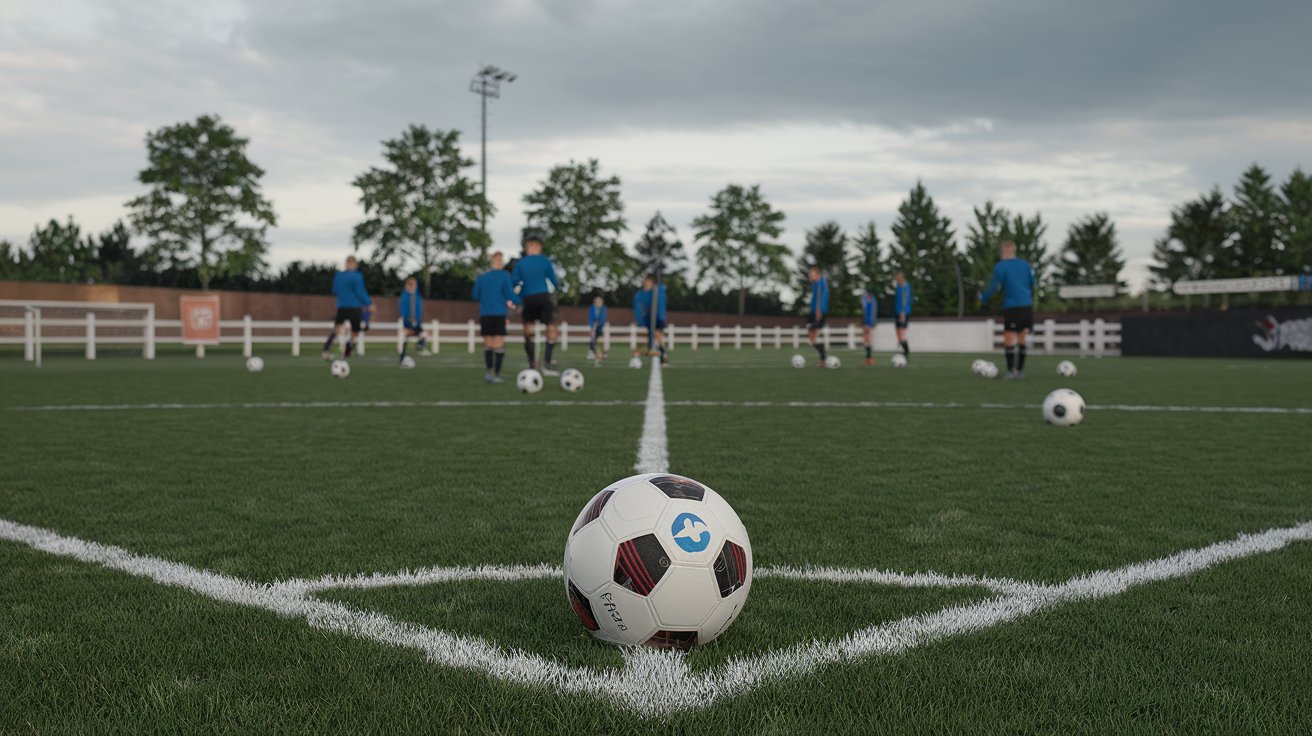
Soccer Footwork Drills: Complete Training Guide for Players
Soccer footwork drills are essential exercises that develop ball control, agility, and coordination for players at every level. These targeted training sessions improve first touch, change of direction, and overall technical skills through repetitive practice. Whether you’re training at home or with a team, mastering footwork drills soccer techniques will significantly enhance your performance on the field and give you a competitive advantage.
Essential Soccer Footwork Drills for Beginners
Beginning players need foundational soccer footwork drills for beginners that focus on basic ball control and coordination. These fundamental exercises establish proper technique and build muscle memory essential for advanced skills. Starting with simple movements allows new players to develop confidence while learning correct form. According to 2024 youth soccer development data, players who master basic footwork show 40% faster skill progression compared to those who skip fundamental training.
The key to successful beginner training lies in repetition and consistency. Soccer footwork drills at home provide excellent opportunities for daily practice without requiring extensive equipment. Focus on slow, controlled movements initially, then gradually increase speed as technique improves. Most beginner drills require only a soccer ball and small space, making them perfect for backyard or garage training sessions.
Toe Touches and Basic Ball Control
Toe touches represent the most fundamental footwork drill for developing close ball control and coordination. Players alternately touch the top of the ball with the bottom of each foot, maintaining balance while keeping the ball stationary. This exercise develops the touch sensitivity crucial for advanced techniques. Practice sessions should include 3 sets of 30 seconds, gradually increasing to 60 seconds as coordination improves. Proper form requires keeping knees slightly bent and maintaining light, quick touches rather than heavy contact with the ball.
Foundation Step-Over Movements
Step-over movements teach players how to create deceptive body language while maintaining ball control. The basic step-over involves planting one foot beside the ball, stepping over it, then using the outside of the opposite foot to push the ball away. This soccer footwork skills exercise develops change of direction ability and prepares players for more complex moves. Begin with stationary practice, then progress to walking pace, and finally incorporate full-speed execution during training sessions.
Intermediate Soccer Footwork Training Techniques
Intermediate players require more challenging footwork drills soccer exercises that combine multiple skills and introduce game-like scenarios. These drills focus on improving reaction time, coordination, and technical precision under moderate pressure. Research from US Soccer Development Academy shows that players practicing intermediate drills for 20 minutes daily improve their technical assessment scores by an average of 25% within 8 weeks of consistent training.
Progression from beginner to intermediate level requires mastering basic techniques while adding complexity through speed, multiple touches, and directional changes. Soccer footwork drills for 10 year olds typically fall into this category, as young players have developed enough coordination to handle more sophisticated movements. These exercises prepare players for competitive situations where quick decision-making and technical execution are crucial for success.
Inside-Outside Cone Navigation
The inside-outside cone drill develops precise ball control using both feet while navigating through obstacles. Set up 5-6 cones in a straight line with 2-yard spacing. Players dribble through using inside-outside touches, alternating feet with each cone. This drill improves close control and prepares players for tight spaces encountered during games. Focus on keeping the ball close to feet while maintaining forward momentum. Advanced variations include backward movement and changing pace throughout the sequence.
Touch-Touch-Roll Combination
This combination drill integrates multiple touches into fluid movement patterns essential for game situations. Players execute two quick touches with the inside of one foot, followed by a sole roll with the same foot. The sequence develops rhythm and coordination while teaching players to vary their touch types. Soccer footwork drills like this one translate directly to game scenarios where players must quickly adjust ball position while maintaining possession under pressure from defenders.
Advanced Footwork Drills for Competitive Players
Advanced soccer footwork drills challenge experienced players with complex movement patterns, rapid direction changes, and high-intensity execution. These exercises simulate game pressure while developing elite-level technical skills required for competitive soccer. According to 2024 MLS Academy training protocols, advanced footwork training comprises 30% of technical development time for players aged 14 and above.
Elite players must master advanced combinations that integrate multiple skills into seamless sequences. These drills require exceptional coordination, balance, and concentration to execute properly. Training at this level focuses on perfecting technique at game speed while maintaining precision under pressure. Advanced footwork training directly correlates with improved performance statistics, including successful dribbles, ball retention, and creating scoring opportunities during competitive matches.
Inside-Outside Alternating Pattern
This advanced pattern drill requires players to execute inside-outside touches with alternating feet while maintaining forward momentum. The sequence involves inside touch with right foot, outside touch with left foot, inside touch with left foot, outside touch with right foot, creating a continuous flowing pattern. This footwork exercise develops ambidextrous ball control and prepares players for unpredictable game situations. Master the pattern at walking speed before progressing to full sprint intensity.
Dynamic Kick-Around Sequences
Alternating kick-around drills combine ball control with explosive direction changes, mimicking game scenarios where players must quickly evade pressure. The exercise involves pushing the ball forward with the inside of one foot, then quickly using the outside of the same foot to redirect the ball sideways. This advanced soccer footwork skills technique requires exceptional coordination and timing. Practice both left and right variations to develop complete technical proficiency.
Skill-Specific Footwork Training Methods
Skill-specific training targets particular aspects of footwork development through specialized exercises designed for specific tactical situations. Modern soccer footwork drills address individual weaknesses while reinforcing strengths through targeted practice methods. US Soccer coaching guidelines recommend dedicating 40% of technical training time to skill-specific exercises based on player position and tactical role requirements.
Each position requires different footwork emphases – wingers need explosive direction changes, central midfielders require close control in tight spaces, and defenders must master controlled clearances under pressure. Footwork drills soccer kids benefit from position-specific training early in development to establish proper technical foundations. These specialized exercises translate directly into improved game performance when practiced consistently with proper technique focus.
Game Scenario Footwork Applications
Translating footwork drills into game situations requires practice under simulated match conditions with time pressure and decision-making elements. These exercises bridge the gap between isolated technical training and competitive performance. Research from US Youth Soccer Association indicates that players practicing scenario-based drills show 35% better transfer of skills to actual game situations compared to traditional isolated training methods.
Effective scenario training incorporates realistic game pressures including time constraints, opponent pressure, and tactical decision-making. Soccer footwork drills for beginners can be adapted to include basic game scenarios, while advanced players work with complex tactical situations. The key is gradually increasing pressure and complexity while maintaining technical precision throughout the exercise progression.
Youth-Specific Footwork Development Programs
Young players require age-appropriate footwork drills soccer for youth that match their developmental stage and attention span capabilities. Children aged 6-12 benefit from short, engaging exercises that emphasize fun while building fundamental skills. According to 2024 US Youth Soccer development research, players who begin structured footwork training before age 10 demonstrate significantly superior technical abilities throughout their soccer careers.
Youth training programs must balance skill development with physical and cognitive limitations of young players. Footwork drills Soccer kids should last 10-15 minutes maximum per session, with frequent water breaks and variation to maintain engagement. Incorporating games and competitions into footwork training increases participation and enjoyment while developing essential technical skills. Progressive difficulty ensures continuous challenge without overwhelming young players’ capabilities.
Home Training and Equipment-Free Drills
Training soccer footwork drills at home provides flexibility and consistency essential for skill development. Home training requires minimal equipment while delivering maximum technical benefit through focused practice sessions. Many professional players credit daily home training as crucial to their development, with 80% of elite players reporting regular home practice during their youth careers according to 2024 professional soccer surveys.
Equipment-free training focuses on body weight movements, ball control, and coordination exercises that require only a soccer ball and small space. Soccer footwork drills without ball develop balance, coordination, and muscle memory through ladder patterns, cone alternatives using household items, and agility movements. These exercises complement ball-focused training while improving overall athleticism and movement quality essential for soccer performance.
Quick Feet Development and Speed Training
Developing quick feet for soccer requires specific exercises targeting foot speed, coordination, and reaction time. Quick feet enable players to maintain close ball control while executing rapid direction changes essential for beating opponents. Professional speed training research shows that foot speed can be improved by 15-20% through consistent targeted training over 12-week periods.
Speed training combines ball control with explosive movements, teaching players how to maintain technical precision while moving at maximum velocity. These exercises include rapid-fire touches, speed ladder work, and reactive drills that challenge coordination under time pressure. The goal is developing the ability to execute technical skills at game pace while maintaining perfect form and control throughout high-intensity movements.
Progressive Training Methodology and Assessment
Effective footwork drills follow progressive methodology that builds complexity systematically while reinforcing fundamental techniques. Training progression should advance from isolated skills to combined movements, then to game-like scenarios with increasing pressure and speed. Assessment criteria help track improvement and identify areas needing additional focus through structured evaluation protocols.
Modern training methods emphasize quality over quantity, with shorter, more focused sessions producing better results than extended low-intensity practice. Soccer footwork drills pdf resources provide structured progressions and assessment criteria for coaches and players. Regular testing ensures training effectiveness while providing motivation through measurable improvement. Video analysis helps identify technical errors and track progress over time, making training more efficient and targeted for individual player needs.
Related video about footwork drills soccer
This video complements the article information with a practical visual demonstration.
Your questions answered
How often should players practice footwork drills to see improvement?
Players should practice footwork drills 4-5 times per week for 15-20 minutes per session to see significant improvement. Consistency is more important than duration – daily short sessions produce better results than occasional long practices. Most players notice improved ball control within 2-3 weeks of regular training, with major skill advancement occurring after 6-8 weeks of consistent practice.
What equipment is needed for effective soccer footwork training?
Basic footwork training requires only a soccer ball and small flat surface. Optional equipment includes cones (or household substitutes), agility ladder, and markers for drill setup. Advanced training may use resistance bands and reaction balls, but fundamental skill development needs minimal equipment. Most professional players developed core skills using just a ball and creative space utilization.
How do footwork drills translate to actual game performance?
Footwork drills improve game performance by developing muscle memory, coordination, and technical precision under pressure. Players who master footwork show better ball control, faster direction changes, and improved ability to beat opponents in one-on-one situations. Studies indicate 40% improvement in successful dribbles and 25% increase in ball retention among players practicing footwork drills regularly.
At what age should children start structured footwork training?
Children can begin basic footwork training as early as age 5-6 with age-appropriate exercises focusing on fun and fundamental movements. Structured training typically starts around age 8-10 when coordination and attention span allow for more detailed instruction. Early exposure to footwork concepts through play-based activities establishes foundation skills that accelerate later technical development.
What are the most common mistakes in footwork drill execution?
Common mistakes include practicing at incorrect speed (too fast without proper technique), neglecting weak foot development, and insufficient repetition for muscle memory formation. Players often focus on complexity over quality, rushing through movements without maintaining proper form. Avoiding these mistakes requires patient progression, equal practice with both feet, and emphasis on precision before increasing speed or difficulty.
How can parents support their child’s footwork development at home?
Parents can support footwork development by providing consistent practice space, encouragement, and basic equipment like cones or markers. Creating a regular practice schedule and participating in training sessions increases motivation and enjoyment. Parents should focus on effort and improvement rather than perfection, making practice fun through games and positive reinforcement while ensuring proper technique guidance when possible.
| Training Level | Recommended Duration | Key Focus Areas |
|---|---|---|
| Beginner (Ages 6-10) | 10-15 minutes, 3-4 times weekly | Basic ball control, coordination, fun-based learning |
| Intermediate (Ages 11-14) | 15-20 minutes, 4-5 times weekly | Combined movements, speed progression, both feet |
| Advanced (Ages 15+) | 20-30 minutes, 5-6 times weekly | Game scenarios, high-intensity, tactical application |
| Elite/Professional | 30-45 minutes, daily sessions | Match-specific situations, pressure training, perfection |