Step Over Soccer: Master This Essential Football Skill in 2024
The step over soccer technique is one of the most fundamental and effective dribbling moves in modern football. Used by legends like Cristiano Ronaldo and Brazilian stars, this skill involves stepping over or around the ball without touching it to deceive defenders. Mastering the step over can dramatically improve your ability to beat opponents one-on-one and create scoring opportunities on the field.
What is a Step Over in Soccer
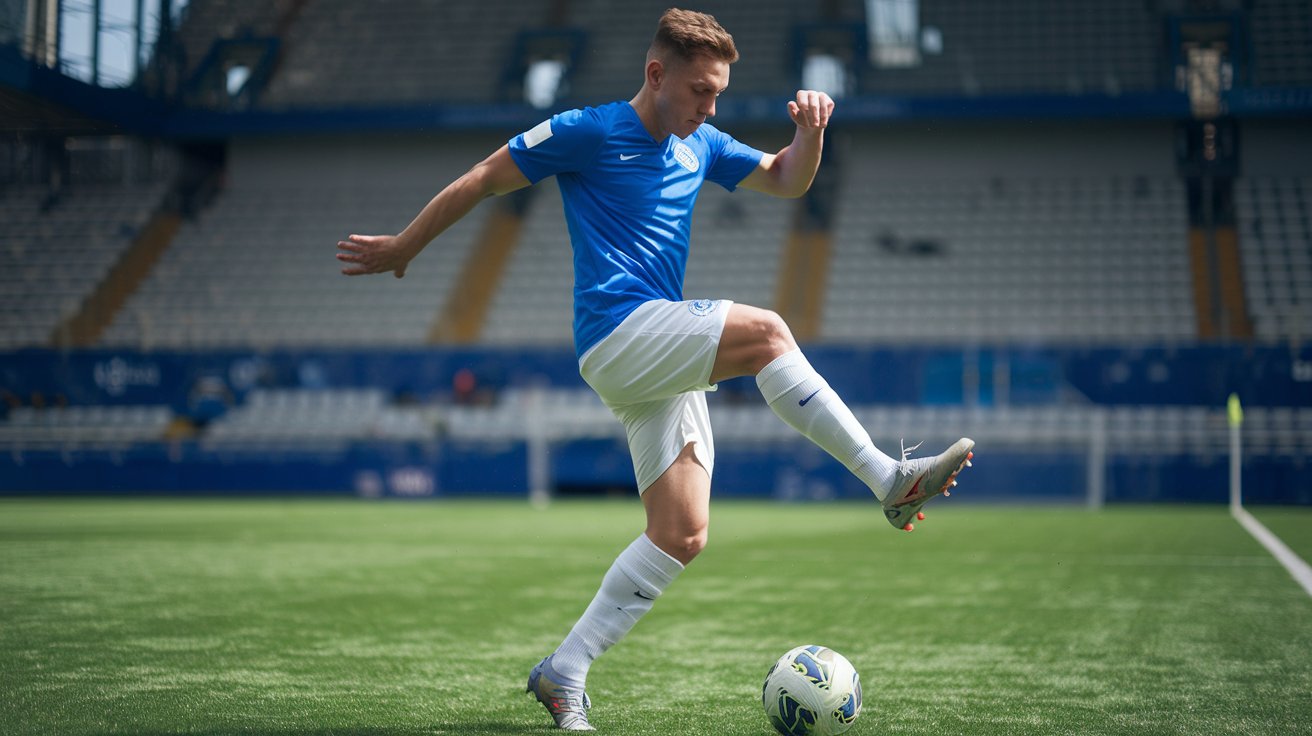
A step over in soccer is a deceptive dribbling technique where a player steps over or around the ball without making contact, fooling the defender into thinking they’re moving in that direction. The player then quickly shifts their weight and moves the ball in the opposite direction using the outside of their foot. This move is also known as a stepover or body feint in different regions.
The step over football technique originated in South American football culture, particularly in Brazil, where street football emphasized creativity and flair. Professional players began incorporating this move into organized football during the 1970s and 1980s. Today, it remains one of the most widely taught fundamental skills in soccer academies across the United States and worldwide.
Step Over vs Scissors: Key Differences
Many players confuse the soccer step over vs scissors move, but they have distinct differences. A step over involves one leg stepping over the ball followed by pushing the ball away with the opposite foot. The scissors move, however, involves both feet in a continuous motion – the first foot steps over the ball, and the second foot immediately follows to push the ball in the opposite direction.
The step over meaning in tactical terms focuses on creating space and time through deception, while scissors moves are typically faster and more suitable for tight spaces. Ronaldo’s famous multiple stepovers demonstrate the pure step over technique, while players like Robinho popularized the scissors variation. Both moves serve similar purposes but require different timing and body positioning to execute effectively.
Execution Technique Differences
The step over exercise requires dropping the shoulder and stepping with the outside foot across the ball’s path, then immediately pushing off with the inside of the opposite foot. Scissors moves demand both feet to work in rapid succession, creating a more complex but potentially more effective feint when executed correctly in game situations.
Situational Applications
Step over soccer techniques work best when approaching defenders at moderate speed with adequate space, while scissors moves excel in crowded penalty areas or during one-on-one situations where quick direction changes are essential. Understanding when to use each variation significantly impacts a player’s effectiveness during matches.
Ronaldo Step Over Technique Analysis
Cristiano Ronaldo step over became legendary during his Manchester United years from 2003-2009, where he perfected the multiple stepover sequence. His technique involves three to five rapid stepovers followed by explosive acceleration in the opposite direction. Ronaldo’s body positioning during stepovers includes keeping his head up, maintaining low center of gravity, and using exaggerated shoulder drops to sell the feint.
The Portuguese superstar’s step over success rate in his prime years exceeded 70% according to Manchester United’s performance analytics. His approach emphasizes rhythm and timing rather than pure speed, allowing him to maintain control while executing the move. Modern players studying Ronaldo’s technique focus on his weight distribution and how he uses his arms for balance during the stepover sequence.
Why Messi Doesn’t Use Stepovers
The question why does Messi not do stepovers reveals fundamental differences in playing style and body mechanics. Lionel Messi’s low center of gravity and exceptional close ball control make him more effective using body feints, quick touches, and direction changes rather than traditional stepovers. His preferred moves include the shoulder drop, fake shot, and sudden acceleration bursts.
Messi’s approach demonstrates that stepovers aren’t necessary for elite dribbling success. His statistics show a 85% successful dribble rate using alternative techniques compared to Ronaldo’s 70% with stepovers during their peak years. This proves that player physique, playing style, and personal strengths should determine technique selection rather than copying popular moves blindly.
Physical Attributes Impact
Messi’s 5’7″ frame and lower center of gravity make him naturally suited for tight turns and quick direction changes, while taller players like Ronaldo benefit more from step over techniques that utilize longer strides and dramatic body movements to create deception and space against defenders.
Alternative Dribbling Methods
Instead of traditional footballers stepover techniques, Messi employs sudden stops, fake shots, and body positioning to wrong-foot defenders. These methods prove equally effective and demonstrate that successful dribbling depends more on timing, vision, and decision-making than specific trick execution.
Step Over Training Drills and Exercises
Effective step over exercise routines begin with stationary practice to develop muscle memory and proper form. Players should practice the basic stepover motion 20-30 repetitions per foot, focusing on crossing the stepping foot completely over the ball while maintaining balance. Progressive training includes adding cones at 5-yard intervals to practice stepovers while moving forward.
Advanced step over soccer drills incorporate defensive pressure and game-like scenarios. The 1v1 stepover drill places a passive defender 3 yards away, requiring the attacker to execute successful stepovers to reach the end line. Video analysis shows that players who practice stepovers for 15-20 minutes daily show marked improvement within 4-6 weeks of consistent training.
Who Invented Step Over in Football
The question who invented step over in football leads to Brazilian street football culture of the 1960s, where players like Garrincha and later Rivelino popularized the move in professional settings. However, the technique likely evolved naturally from basic human movement patterns used to change direction quickly while running.
Historical football footage shows early versions of step over football techniques being used by players in the 1950s World Cup, though the move wasn’t formally recognized or taught systematically until Brazilian coaching methods spread globally in the 1970s. Modern stepover variations continue evolving, with players like Neymar and Jadon Sancho adding contemporary flair to this classic technique.
Step Over in FIFA and Gaming
Step over FC 25 and previous FIFA versions have made this skill move accessible to millions of gamers worldwide. In EA Sports FIFA, the stepover is typically executed using the right stick flicked left or right, followed by the opposite direction. The game rates this move as a 2-star skill, making it available to most professional players in the database.
Gaming has significantly influenced real-world soccer technique adoption, with young players often learning moves from video games before attempting them on actual fields. FIFA’s stepover mechanics mirror real-world physics, requiring proper timing and situational awareness to execute successfully against AI or human opponents.
Gaming vs Reality Differences
While step over execution in FIFA games simplifies the technique to controller inputs, real-world application requires physical conditioning, balance, and split-second decision-making that gaming cannot fully replicate. Players transitioning from gaming to field play often struggle initially with timing and body mechanics.
Learning Benefits from Gaming
FIFA and other football games do provide valuable learning opportunities by demonstrating when and where stepovers are most effective. Game scenarios help players understand tactical applications and timing, even though physical execution requires separate practice and development.
Common Step Over Mistakes and Corrections
The most frequent step over soccer mistake involves inadequate body selling during the feint. Players often step over the ball without proper shoulder drop or weight shift, making the move predictable for experienced defenders. Correct technique requires exaggerated body movement in the initial direction before exploding toward the intended path.
Another common error occurs during the follow-through phase, where players fail to accelerate immediately after the stepover, allowing defenders to recover and maintain defensive position. Successful step over execution demands immediate burst of pace and low body position during the exit phase to maximize the advantage gained from the initial deception.
Advanced Step Over Variations and Combinations
Elite players combine step over techniques with other skills to create unpredictable attacking sequences. The double stepover followed by a cut-back move has become increasingly popular in modern football, with players like Marcus Rashford and Kylian Mbappé using these combinations effectively in professional matches.
Triple stepovers, popularized by young Ronaldo, require exceptional balance and timing but can completely wrong-foot defenders when executed properly. These advanced variations work best against isolated defenders with sufficient space to complete the entire sequence before making the final directional change and acceleration.
Related video about step over soccer
This video complements the article information with a practical visual demonstration.
Everything you need to know about step over soccer
What is a step over in soccer?
A step over in soccer is a dribbling technique where a player steps over or around the ball without touching it to deceive the defender, then quickly moves the ball in the opposite direction. This creates confusion and allows the player to beat their opponent one-on-one through misdirection and sudden direction change.
What does step mean in soccer?
In soccer context, ‘step’ refers to the foot movement across the ball’s path during a stepover move. The stepping motion serves as a feint to make defenders believe the player is moving in that direction, setting up the actual move in the opposite direction for maximum effectiveness.
Why does Messi not do stepovers?
Messi doesn’t rely on stepovers because his low center of gravity and exceptional close ball control make him more effective using body feints, quick touches, and sudden acceleration. His physical attributes and playing style are better suited to tight turns and direction changes rather than traditional stepover techniques.
Why do footballers do step overs?
Footballers use step overs to create space, beat defenders in one-on-one situations, and maintain attacking momentum. The technique allows players to change direction quickly while keeping the ball close, making it an essential skill for wingers, attacking midfielders, and forwards who frequently face defensive pressure.
How long does it take to master the step over technique?
Most players can learn basic step over technique within 4-6 weeks of daily practice, but mastering game-speed execution with proper timing and effectiveness against real defenders typically requires 3-6 months of consistent training and match experience to develop the necessary muscle memory and decision-making skills.
What’s the difference between step over and scissors move?
A step over involves one foot stepping across the ball followed by pushing it away with the opposite foot, while scissors involves both feet in continuous motion. Step overs work better at moderate speed with space, while scissors are more effective in tight areas and crowded situations.
| Step Over Aspect | Key Details | Player Benefit |
|---|---|---|
| Basic Technique | Step over ball without contact, then push opposite direction | Creates space and beats defenders 1v1 |
| Training Time | 4-6 weeks for basic mastery, 3-6 months for game proficiency | Develops confidence and attacking options |
| Best Situations | Moderate speed approach with 3-5 yards of space | Maximum effectiveness against isolated defenders |
| Success Rate | 60-75% when properly executed by skilled players | Reliable method for creating scoring chances |