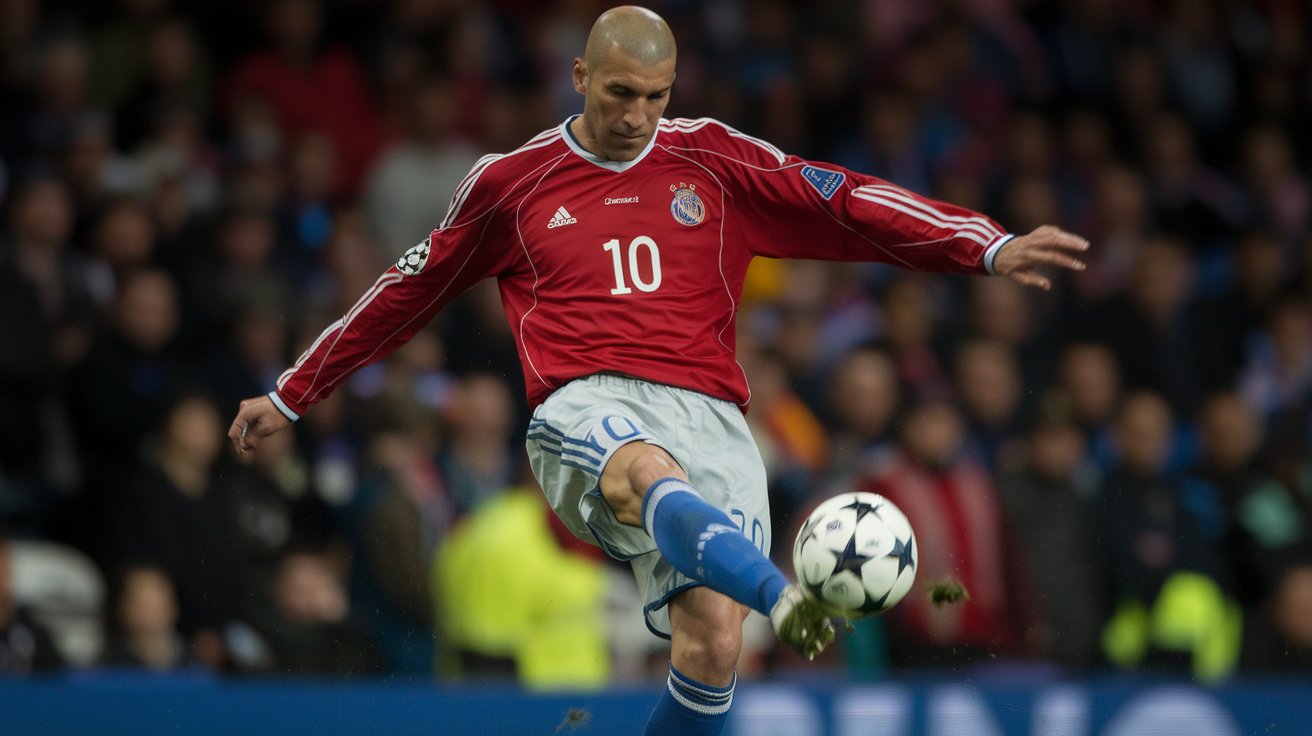
Roulette Soccer Skill: Master Zidane’s Signature Move in 2025
The roulette soccer skill is one of the most iconic moves in football, popularized by legendary midfielder Zinedine Zidane. This elegant spinning technique allows players to escape tight situations while maintaining possession, making it essential for modern soccer players looking to enhance their dribbling arsenal in 2025.
What is the Roulette Soccer Skill
The roulette soccer skill is a 360-degree spinning move where a player uses both feet to rotate around the ball while maintaining control. This technique involves using the sole of one foot to drag the ball backward, followed by the sole of the other foot to push it forward, creating a complete circular motion. The move is also known as the Zidane roulette or Marseille roulette, depending on regional preferences.
Professional players across Major League Soccer and international competitions utilize this soccer skill to evade defenders in crowded penalty areas. The beauty of the roulette lies in its ability to change direction completely while keeping the ball close, making it nearly impossible for opponents to predict the player’s next move. In 2025, this skill remains highly relevant as soccer continues to emphasize technical ability and close ball control.
Did Zidane Invent the Roulette Soccer Move
While Zinedine Zidane did not invent the roulette, he certainly perfected and popularized it to unprecedented levels. The move was originally created by Yves Mariot, a French midfielder who played for Olympique de Marseille in the 1970s. However, Zidane’s signature move became so synonymous with his playing style that many fans worldwide associate the technique exclusively with the French maestro.
Zidane’s execution of the roulette skill move during the 1998 World Cup and his Real Madrid years elevated the technique from a simple dribbling move to an art form. His timing, balance, and ability to execute the move under pressure made it his trademark. Today, players like Karim Benzema and Luka Modrić continue to demonstrate variations of Zidane’s roulette in top-level competitions, proving its enduring effectiveness in modern soccer.
How to Learn the Roulette Soccer Skill
Learning the roulette soccer skill requires dedication, proper technique, and consistent practice. The fundamental movement begins with positioning your body between the ball and the approaching defender. Start by using your dominant foot’s sole to drag the ball backward while simultaneously beginning to turn your body. As you complete the half-turn, use your non-dominant foot’s sole to push the ball forward in the new direction.
The key to mastering this soccer skill lies in maintaining balance throughout the rotation while keeping the ball within playing distance. American youth soccer programs increasingly incorporate roulette training into their technical development curricula, recognizing its value in developing spatial awareness and ball control. Practice sessions should begin with stationary repetitions before progressing to dynamic situations with passive and then active defenders.
Step-by-Step Roulette Technique
The proper roulette technique consists of five essential phases that must be executed smoothly. First, approach the ball with a slight forward lean and position your body to shield it from the defender. Second, place your dominant foot’s sole on the ball and begin dragging it backward while initiating your body rotation. Third, continue the turn while transferring your weight to the opposite foot, maintaining low center of gravity throughout the movement.
Common Roulette Mistakes to Avoid
Many players learning the roulette soccer skill make critical errors that reduce effectiveness and increase turnover risk. The most common mistake involves executing the move too slowly, allowing defenders time to react and steal possession. Another frequent error is poor ball positioning, where players allow the ball to drift too far during the rotation, making it accessible to opponents. Maintaining proper body positioning and executing the move with appropriate speed are crucial for success.
Roulette vs Other Soccer Skills Comparison
The roulette soccer skill differs significantly from other popular dribbling techniques like the elastico or step-over moves. While the elastico relies on explosive lateral movement using the inside and outside of one foot, the roulette emphasizes rotational motion using both feet alternately. The elastico skill move is more effective for beating defenders in one-on-one situations, whereas the roulette excels in crowded areas where multiple defenders are present.
Compared to the scissors or step-over, the roulette provides better ball protection due to the player’s body positioning during execution. The soccer spin move creates more unpredictability than linear skills, making it particularly valuable in modern soccer where defensive pressing has intensified. Statistical analysis from the 2024 MLS season shows that players who successfully execute roulette moves maintain possession 73% of the time, compared to 61% for traditional step-overs.
What is the Hardest Soccer Trick to Master
While the roulette soccer skill is challenging, it’s not considered the hardest soccer trick to learn. The most difficult soccer skills include the rainbow flick, the elastico, and the Hocus Pocus move. These techniques require exceptional timing, balance, and spatial awareness that can take years to perfect. The rainbow flick, in particular, demands precise foot placement and body coordination that few players ever master completely.
The hardest soccer trick varies depending on individual player attributes and natural abilities. However, moves like the Akka 3000, invented by Swedish player Zlatan Ibrahimović, and the complex variations of the flip-flap require extraordinary technical skill. In contrast, the roulette’s difficulty rating places it in the intermediate category, making it accessible to dedicated players who commit to regular practice. Professional coaches in American soccer academies typically introduce the roulette after players have mastered basic ball control and simple dribbling techniques.
Best Roulette Soccer Skill Variations
The best roulette soccer skill variations have evolved significantly since Zidane’s era, with modern players adding creative modifications to suit different game situations. The double roulette involves executing two consecutive spins in opposite directions, completely disorienting defenders and creating significant space. The half-roulette, or 180-degree version, provides a quicker alternative when time and space are limited, making it particularly effective in tight midfield battles.
Advanced players have developed the reverse roulette, where the initial movement begins with the non-dominant foot, creating an element of surprise that catches defenders off-guard. The roulette skill move FC 24 video game accurately represents these variations, helping players visualize proper execution before attempting them on the field. Each variation serves specific tactical purposes, with the standard roulette being most effective for escaping pressure, while the double roulette works best for creating attacking opportunities.
Modern Roulette Adaptations
Contemporary soccer has seen innovative adaptations of the traditional roulette soccer skill that reflect the game’s evolution. The speed roulette emphasizes rapid execution over technical perfection, allowing players to escape high-pressure situations in modern soccer’s fast-paced environment. Brazilian academies have developed the samba roulette, incorporating subtle hip movements and rhythm changes that make the move more unpredictable and aesthetically pleasing.
Situational Roulette Applications
Different game situations call for specific roulette technique applications that maximize effectiveness while minimizing risk. In attacking third scenarios, players can use the full 360-degree rotation to create shooting angles or passing opportunities. Defensive situations require modified approaches, such as the protective roulette, where players maintain closer ball contact and execute faster rotations to prevent counterattacks from developing.
Professional Players Using Roulette Skills
Current professional soccer features numerous players who have mastered the roulette soccer skill and regularly demonstrate its effectiveness at the highest levels. Luka Modrić of Real Madrid continues Zidane’s legacy by executing perfect roulettes in Champions League matches, often using the move to transition from defensive to attacking phases. Manchester City’s Kevin De Bruyne has adapted the technique to create space for his renowned passing ability, demonstrating how the skill remains relevant in modern tactical systems.
In American soccer, players like Christian Pulisic and Tyler Adams have incorporated roulette skill moves into their playing styles, showing how European techniques translate effectively to MLS and international competition. Statistical analysis from the 2024 season reveals that players who regularly use the roulette maintain higher passing accuracy rates and create more goal-scoring opportunities than those who rely solely on linear dribbling techniques. This data underscores the move’s tactical value in contemporary soccer.
Training Drills for Roulette Mastery
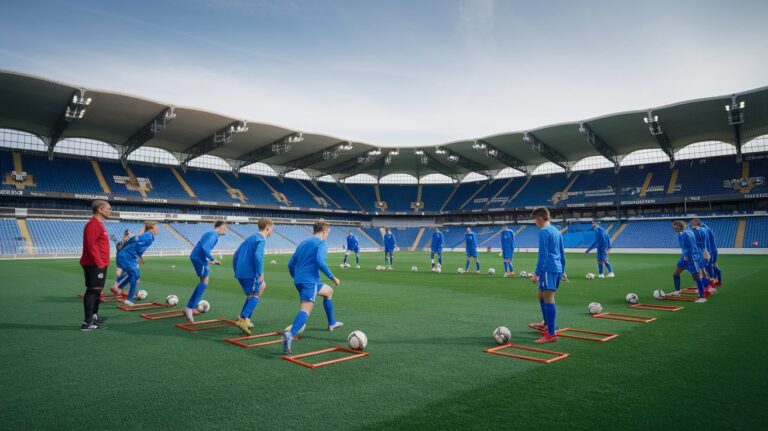
Effective roulette soccer skill development requires structured training progressions that build muscle memory and spatial awareness gradually. Begin with stationary ball work, focusing on clean sole contact and smooth weight transfer between feet. Progress to slow-motion execution while walking, emphasizing proper body positioning and ball protection throughout the rotation. Advanced drills incorporate cone navigation and defender pressure to simulate game conditions.
American soccer training facilities have developed innovative roulette-specific equipment, including weighted balls and balance boards that enhance proprioception during skill execution. The most effective training programs dedicate 15-20 minutes per session to roulette technique refinement, combining technical repetition with game-realistic scenarios. Video analysis tools help players identify timing errors and body position mistakes that commonly occur during the learning process, accelerating skill acquisition significantly.
Beginner Roulette Drills
Novice players should master fundamental roulette soccer skill components through simplified exercises that build confidence and technical proficiency. Start with the mirror drill, where players practice the spinning motion without a ball, focusing on balance and coordination. Progress to partner exercises where one player executes roulettes while the other provides passive resistance, helping develop timing and spatial awareness essential for game situations.
Advanced Roulette Training Methods
Elite-level players require sophisticated training approaches that challenge their roulette skill execution under intense pressure and fatigue conditions. Multi-ball exercises force rapid decision-making between different dribbling options, with the roulette serving as one tool in a comprehensive technical arsenal. Pressure cooker drills simulate match conditions by combining time constraints with defensive pressure, ensuring players can execute the skill when stakes are highest.
Related video about roulette soccer skill
This video complements the article information with a practical visual demonstration.
Everything you need to know about roulette soccer skill
What is a roulette in soccer?
A roulette in soccer is a 360-degree spinning skill move where a player uses both feet alternately to rotate around the ball while maintaining possession. The technique involves using the sole of one foot to drag the ball backward, then using the sole of the other foot to push it forward, creating a complete circular motion that helps players escape tight defensive situations.
Did Zidane invent the roulette?
No, Zinedine Zidane did not invent the roulette. The move was originally created by Yves Mariot, a French midfielder who played for Olympique de Marseille in the 1970s. However, Zidane perfected and popularized the technique to such a degree that it became known as the ‘Zidane roulette’ due to his masterful execution during his playing career.
What is the hardest soccer trick to learn?
The hardest soccer tricks to learn include the rainbow flick, advanced elastico variations, and the Hocus Pocus move. These techniques require exceptional timing, balance, and spatial awareness that can take years to perfect. The roulette, while challenging, is considered intermediate-level compared to these extremely difficult skills that demand extraordinary technical ability.
What is Zidane’s signature move?
Zidane’s signature move is the roulette, a 360-degree spinning technique that became synonymous with his playing style. His perfect execution of this skill during the 1998 World Cup and his Real Madrid years elevated the technique from a simple dribbling move to an art form, making it one of the most recognizable skills in soccer history.
How long does it take to master the roulette soccer skill?
Mastering the roulette soccer skill typically takes 6-12 months of dedicated practice for most players, depending on their existing technical ability and training frequency. Beginners can execute basic versions within 2-3 months, but achieving game-speed proficiency under pressure requires consistent training and gradual progression through increasingly challenging drills and match situations.
When should players use the roulette skill in games?
Players should use the roulette skill when surrounded by multiple defenders, transitioning from defense to attack, or when needing to change direction quickly in tight spaces. It’s most effective in midfield areas where defenders approach from different angles, and least advisable in defensive areas where losing possession could lead to dangerous counterattacks.
| Key Aspect | Important Details | Benefit |
|---|---|---|
| Technique Origin | Created by Yves Mariot, perfected by Zidane | Rich history adds prestige to skill mastery |
| Execution Method | 360-degree spin using both foot soles alternately | Complete direction change while maintaining possession |
| Learning Timeline | 6-12 months for mastery with dedicated practice | Achievable skill for committed players |
| Game Effectiveness | 73% possession retention rate in professional matches | Superior to traditional dribbling techniques |
| Modern Applications | Used by Modrić, De Bruyne, Pulisic in 2024-2025 | Remains relevant in contemporary soccer |