15 Best Individual Soccer Drills to Master Your Game in 2025
Individual soccer drills are essential training exercises that allow players to develop their skills independently without requiring teammates or coaches. These solo practices help improve ball control, shooting accuracy, and overall technique while building confidence on the field. Whether you’re practicing at home or on the field, consistent individual training is the foundation of soccer excellence.
Essential Ball Control Drills for All Skill Levels
Ball control forms the foundation of all soccer skills, making it crucial for players of every age group. Individual soccer drills focused on ball mastery help develop the muscle memory needed for confident play during matches. These exercises require minimal equipment and can be performed anywhere with adequate space.
Mastering ball control through consistent practice directly translates to improved performance during games. Players who dedicate time to individual soccer training drills show significantly better touch, balance, and spatial awareness compared to those who only practice during team sessions.
Juggling for Touch and Coordination
Juggling remains one of the most effective individual soccer drills for beginners and advanced players alike. Start with 5-10 touches using both feet, gradually increasing to 50+ consecutive touches. Focus on using different parts of your foot including the instep, outside, and thigh. This drill improves first touch, balance, and develops a feel for the ball that translates directly to game situations.
Figure 8 Dribbling Technique
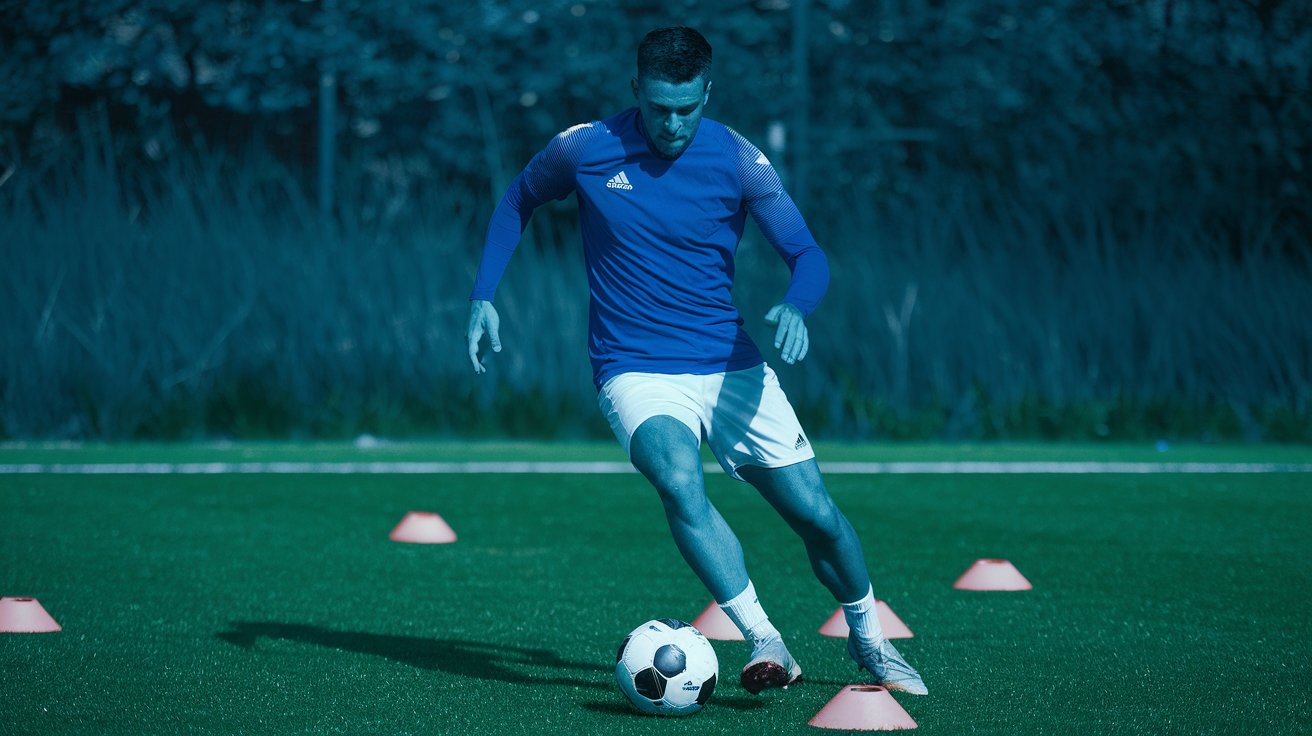
Set up two cones 5 yards apart and dribble in a figure-8 pattern using only your right foot, then left foot, then both feet alternately. This individual soccer drill enhances close ball control and agility while improving your ability to change direction quickly. Practice for 2-3 minutes per variation, focusing on keeping the ball close to your feet throughout the movement.
Age-Specific Training Programs
Different age groups require tailored approaches to maximize skill development and maintain engagement. Individual soccer drills for 8 year olds should emphasize fun and basic skill building, while programs for teenagers and adults can incorporate more complex movements and conditioning elements.
Understanding developmental stages helps create appropriate training intensity and complexity. Individual soccer drills for 13 year olds can bridge the gap between basic skills and advanced techniques, focusing on building confidence while introducing more challenging concepts.
Youth Development Drills (Ages 8-12)
Young players benefit from simple, enjoyable exercises that build fundamental skills. Individual soccer drills for 10 year olds should include basic juggling, cone weaving, and wall passes. Use colorful cones and turn drills into games with point systems or time challenges. Sessions should last 20-30 minutes to maintain attention and prevent fatigue while building positive associations with solo practice.
Teen and Adult Training Approaches
Individual soccer drills for adults and teenagers can incorporate higher intensity and technical complexity. Focus on position-specific skills, advanced ball manipulation, and fitness integration. Individual soccer drills for high school players should emphasize college recruitment preparation with measurable skill assessments and progressive difficulty increases over the season.
Home Practice Solutions
Training at home has become increasingly important for player development, especially following the growth of backyard soccer culture in the United States. Individual soccer drills at home require creativity and adaptation but can be just as effective as field-based training when executed properly.
Limited space shouldn’t restrict skill development. Many professional players credit their success to countless hours of individual practice at home, using walls, garage doors, and small yard spaces to hone their craft.
Wall Practice Techniques
Wall passes are among the most effective individual soccer drills at home for improving passing accuracy and first touch. Stand 5-10 feet from a wall and practice one-touch passes, two-touch combinations, and volleys. Vary the pace and height of your passes while focusing on clean contact and quick ball recovery. This drill simulates game-speed decision making and improves reaction time significantly.
Small Space Dribbling Drills
Transform limited backyard space into effective training areas using household items as markers. Practice tight control drills using bottles or shoes as cones, focusing on individual soccer skills that translate to crowded game situations. Work on step-overs, cuts, and quick direction changes in spaces as small as 10×10 feet, emphasizing ball mastery over speed.
Advanced Technical Development
Advanced individual soccer drills challenge players to combine multiple skills while maintaining high execution standards. These exercises prepare players for complex game situations where quick decision-making and technical precision determine success.
Professional development requires consistent work on advanced techniques that separate elite players from recreational ones. Individual training at this level focuses on perfecting details and building consistency under pressure.
Shooting Accuracy Drills
Set up targets in goal corners using cones or markers and practice shooting from various angles and distances. Individual soccer shooting drills should emphasize placement over power initially, with players aiming for specific targets 8 out of 10 attempts. Progress to moving ball shooting and quick release techniques as accuracy improves, simulating game-realistic scoring opportunities.
Long Passing Precision Training
Practice long-range passing accuracy using targets placed 25-40 yards away. Focus on proper foot contact, follow-through, and ball trajectory. This individual drill improves field vision and delivery accuracy, essential skills for midfielders and defenders. Use both feet and practice various passing techniques including driven balls, chips, and curled passes to develop a complete passing range.
Creating Effective Training Schedules
Successful individual development requires structured, consistent practice schedules that balance skill work with physical conditioning. Individual soccer training programs should incorporate progressive difficulty and regular assessment to ensure continuous improvement.
Modern training methodology emphasizes quality over quantity, with focused 45-60 minute sessions proving more effective than longer, unfocused practice periods. Individual training schedules should align with team practice and game schedules to complement rather than compete with organized activities.
Weekly Training Structure
Organize individual soccer practice into themed sessions focusing on different skill areas throughout the week. Monday might emphasize ball control, Wednesday could focus on shooting, and Friday on passing accuracy. This approach ensures comprehensive development while allowing adequate recovery time between intense skill sessions. Track progress weekly to maintain motivation and identify areas needing additional attention.
Seasonal Progression Planning
Design individual training progressions that align with soccer seasons and player development goals. Pre-season should emphasize fitness integration with technical skills, while in-season training maintains sharpness without causing fatigue. Off-season provides opportunities for major skill development and addressing weaknesses identified during competitive play. Adjust intensity and volume based on game schedules and physical demands.
Measuring Progress and Skill Assessment
Tracking improvement through measurable assessments keeps players motivated and identifies areas requiring additional focus. Individual skill development benefits from both subjective feel and objective measurement to ensure balanced progress across all technical areas.
Regular assessment helps maintain training quality and prevents players from developing bad habits through repetitive practice. Individual progress tracking should include video analysis, skill tests, and performance metrics that translate directly to game improvement.
Related video about individual soccer drills
This video complements the article information with a practical visual demonstration.
Frequently Asked Questions
How often should I practice individual soccer drills?
For optimal development, practice individual soccer drills 3-4 times per week for 30-45 minutes per session. This frequency allows skill development without overuse fatigue while maintaining consistency needed for improvement. Adjust frequency based on your current fitness level and team practice schedule.
What equipment do I need for individual soccer training?
Essential equipment includes a soccer ball, 6-8 cones, a wall or rebounder for passing practice, and markers for targets. Optional equipment includes agility ladders, hurdles, and portable goals. Most effective individual drills require minimal equipment and can be adapted for available space and resources.
Can individual drills really improve my game performance?
Yes, individual soccer drills significantly improve game performance by developing muscle memory, technical skills, and confidence. Studies show players who combine team practice with individual training improve 25-30% faster than those relying only on team sessions. Consistent solo practice builds the foundation for advanced team play.
How do I know if I’m doing individual drills correctly?
Record yourself performing drills and compare with instructional videos, or ask coaches for feedback during team practice. Focus on proper form over speed initially, ensuring clean ball contact and controlled movements. Consider working with a skills trainer periodically to refine technique and prevent bad habits from developing.
What’s the best age to start individual soccer training?
Children can begin simple individual soccer drills around age 6-7, focusing on fun activities like juggling and basic ball control. Structured individual training becomes more effective around age 10-12 when attention spans increase and motor skills develop. However, players of any age can benefit from appropriately designed individual training programs.
Should individual drills focus on weaknesses or strengths?
Balance individual training between improving weaknesses and enhancing strengths. Spend 60% of time addressing weak areas for rapid improvement and 40% developing existing strengths to elite levels. This approach ensures well-rounded development while building confidence through strength areas. Regularly reassess to adjust focus as skills develop.
| Drill Category | Primary Benefit | Recommended Frequency |
|---|---|---|
| Ball Control | Improves first touch and confidence | Daily, 15-20 minutes |
| Shooting Practice | Enhances accuracy and power | 3x per week, 20 minutes |
| Passing Drills | Develops precision and vision | 4x per week, 25 minutes |
| Dribbling Skills | Builds agility and creativity | 5x per week, 10-15 minutes |