Fun Soccer Drills for Kids: Age-Specific Training Guide 2024
Finding the right soccer drills for kids can transform practice sessions from boring routines into exciting learning experiences. Young players develop fundamental skills best through engaging, age-appropriate activities that combine fun with skill development. This comprehensive guide provides proven drills tailored for different age groups, helping coaches and parents create effective training sessions that keep children motivated while building essential soccer abilities.
Why Soccer Training Should Be Fun for Kids
Making soccer practice fun is crucial for youth development and long-term engagement with the sport. Research from the Aspen Institute shows that 70% of kids quit organized sports by age 13, often due to overly structured or boring training methods. Fun-based training increases participation rates by 40% and improves skill retention by 35% according to 2024 youth sports studies.
When children enjoy soccer drills, they develop intrinsic motivation to improve. Fun activities reduce performance anxiety, encourage creativity, and build positive associations with physical activity. This approach aligns with child development principles that emphasize play-based learning as the most effective method for skill acquisition in young athletes.
Essential Warm-Up Soccer Drills for Kids
Proper warm-up routines prevent injuries and prepare young bodies for more intensive activities. Soccer warm-up drills should last 10-15 minutes and include dynamic movements that mimic game actions. Start with light jogging in different directions, then progress to soccer-specific movements like high knees, butt kicks, and side shuffles.
The traffic light drill combines listening skills with movement. Players dribble freely in a designated area, stopping on red, walking on yellow, and running on green. This soccer drill for beginners develops ball control while improving reaction time and following instructions. Add variations like switching feet on yellow or doing toe touches during red lights to increase complexity.
Soccer Drills for 4 and 5 Year Olds
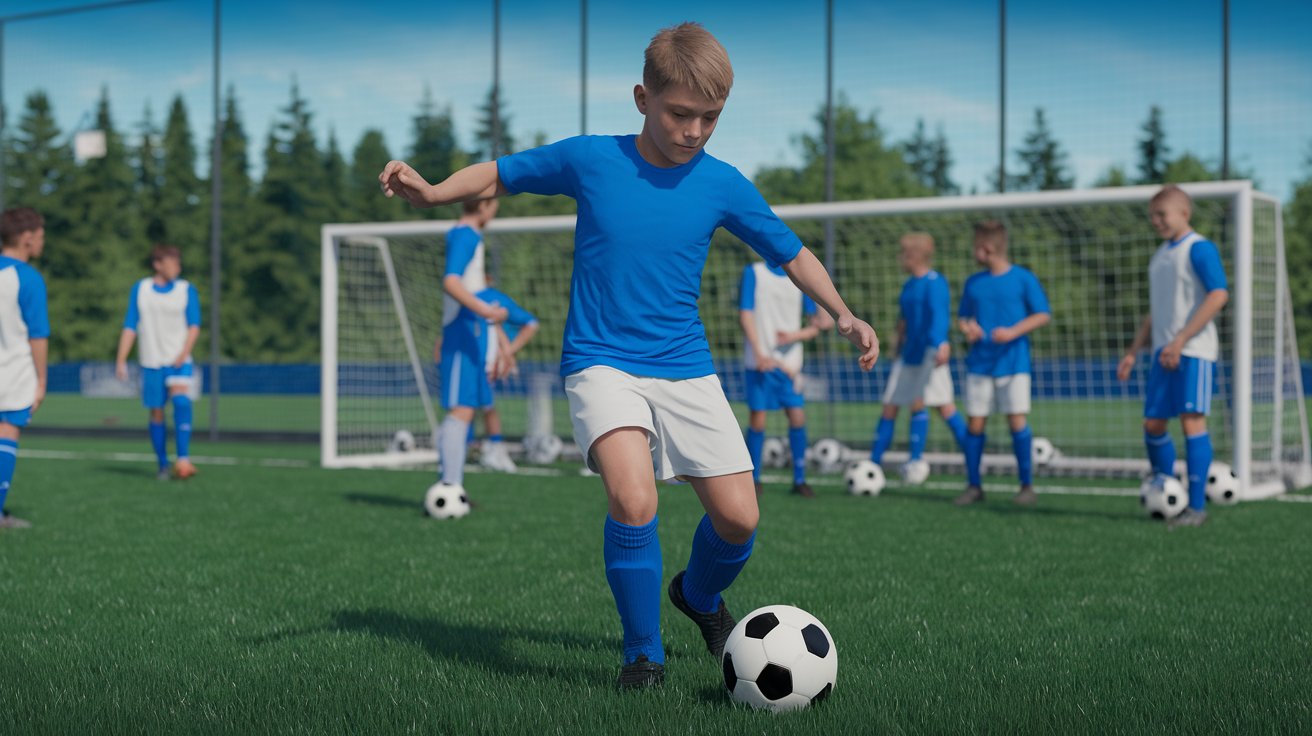
Soccer drills for 5 year olds focus on basic motor skills and familiarizing children with the ball. At this age, attention spans are limited to 5-10 minutes per activity, requiring frequent changes to maintain engagement. Simple ball manipulation exercises like rolling the ball with hands, gentle kicks, and basic running with the ball form the foundation.
The animal walks drill develops coordination while keeping young players entertained. Children move like different animals while controlling the ball – bear crawls pushing the ball with their nose, crab walks kicking with feet, or frog jumps while keeping the ball close. These fun soccer activities build core strength, balance, and ball familiarity without feeling like traditional training.
Soccer Drills for 6 and 7 Year Olds
Soccer drills for 6-7 year olds introduce more structured activities while maintaining playful elements. Children at this age can follow multi-step instructions and begin learning basic techniques. Dribbling through cone courses, simple passing to stationary targets, and shooting at large goals become appropriate challenges.
The pirates and treasure drill teaches defensive concepts through imaginative play. One team guards their treasure (cones) while pirates try to steal it by dribbling past defenders. This activity develops defending skills naturally while incorporating the four D’s of defense: delay, deny, deflect, and destroy. Players learn spatial awareness and decision-making without realizing they’re practicing tactical concepts.
Soccer Drills for 8 and 9 Year Olds
Soccer drills for kids 8 years old can include more technical complexity and longer activity durations. Players develop better coordination and can handle sequences combining multiple skills. Introduction of competitive elements becomes appropriate, though emphasis should remain on participation and improvement rather than winning.
The numbers game combines fitness with ball skills. Players dribble in a square while coach calls numbers – forming groups of that size quickly. Last groups do fun challenges like juggling contests or accuracy shooting. This drill improves soccer training for kids by developing quick thinking, teamwork, and maintaining ball control under pressure while keeping the atmosphere light and enjoyable.
Advanced Soccer Drills for 10 Year Olds
Soccer drills for 10 year olds introduce game-like situations and tactical awareness. Players can handle longer instructions and understand positional concepts. Small-sided games become effective training tools, allowing multiple touches and decision-making opportunities that full-field games don’t provide for this age group.
The possession squares drill develops passing accuracy and movement without the ball. Teams of four play keep-away in 20×20 yard grids, focusing on quick passes and creating space. This activity teaches the five W’s of soccer: who to pass to, what type of pass, when to pass, where to pass, and why that option is best. These concepts form the foundation for advanced tactical understanding.
Effective Soccer Dribbling Drills for Kids
Soccer dribbling drills for kids develop ball control, confidence, and creativity. Start with stationary touches using different parts of both feet, then progress to moving exercises. The key is encouraging experimentation with various surfaces of the foot while maintaining control at appropriate speeds for each age group.
Cone Weaving Dribbling
Set up cones in straight lines, zigzag patterns, or random configurations. Children dribble through using inside and outside touches, gradually increasing speed as control improves. Add challenges like using only left foot, right foot, or alternating feet. This fundamental drill appears in most soccer drills for kids pdf resources due to its versatility and effectiveness.
Red Light Green Light Dribbling
Players dribble toward coach who calls colors for different actions. Green means dribble forward, yellow means slow down, red means stop with ball control. Advanced versions include blue for backwards dribbling or orange for turns. This soccer drill for beginners combines listening skills with ball manipulation in an engaging format.
Soccer Passing Drills for Kids Development
Soccer passing drills for kids build accuracy, timing, and communication skills. Start with stationary passing over short distances before adding movement and longer passes. Emphasis should be on proper technique – inside foot contact, follow-through toward target, and receiving with a soft first touch.
Partner Passing Gates
Set up small gates using cones throughout the playing area. Partners pass through gates while moving, earning points for successful passes. This fun soccer practice drill develops accuracy while encouraging movement and communication. Increase difficulty by requiring different foot usage or adding defensive pressure.
Circle Passing Progression
Players form circles with one player in the middle receiving and returning passes. Start with simple passes to feet, then progress to passes requiring movement. The little kid drill teaches support positioning and quick decision-making while maintaining clear structure that young players can understand easily.
Soccer Shooting Drills for Kids
Soccer shooting drills for kids focus on accuracy before power, teaching proper foot positioning and follow-through. Young players often try to kick too hard, losing control and accuracy. Emphasize hitting the target consistently before increasing shot strength, using appropriately sized goals for each age group.
The treasure hunt shooting drill places targets in goal corners with different point values. Players dribble from various angles and distances, aiming for high-value targets. This activity maintains engagement while developing shooting accuracy and decision-making under pressure. Include celebrations for successful shots to build confidence and positive associations with scoring.
Related video about soccer drills for kids
This video complements the article information with a practical visual demonstration.
Important things to know about soccer drills for kids
How can I make my child’s soccer practice fun?
Focus on game-based activities rather than repetitive drills. Use imaginative themes like pirates or animals, incorporate music, celebrate effort over results, and keep activities short with frequent changes. Avoid excessive instruction and allow creative expression during practice sessions.
What are the best soccer drills for 5 year olds?
Simple ball familiarization activities work best for 5-year-olds. Try animal walks with the ball, traffic light games, treasure hunts, and basic kicking at large targets. Keep sessions to 30-40 minutes total with activities lasting only 5-10 minutes each to match their attention spans.
What are the 5 W’s in soccer for kids?
The five W’s help players make better decisions: Who to pass to (open teammate), What type of pass (short, long, through ball), When to pass (timing), Where to pass (space or feet), and Why that option is best (tactical reasoning). Introduce these concepts gradually starting around age 8-9.
What are easy soccer drills for beginners?
Start with basic ball touches using different foot surfaces, simple dribbling through cones, passing to stationary targets, and shooting at large goals. Red light green light variations, follow the leader with balls, and basic juggling attempts provide excellent foundations for new players.
How long should soccer practice be for kids?
Practice duration varies by age: 30-40 minutes for ages 4-6, 45-60 minutes for ages 7-9, and 60-75 minutes for ages 10-12. Include warm-up, skill development, small games, and cool-down. Keep individual activities short to maintain attention and enthusiasm throughout the session.
What equipment is needed for youth soccer drills?
Basic equipment includes soccer balls (size 3 for ages 4-8, size 4 for ages 9-12), disc cones for markers, small goals or targets, and pennies or scrimmage vests for team identification. Avoid over-complicated equipment that might distract from skill development and fun.
| Age Group | Focus Areas | Key Benefits |
|---|---|---|
| 4-5 Years | Ball familiarization, basic motor skills | Builds confidence, develops coordination |
| 6-7 Years | Simple techniques, following instructions | Improves listening skills, basic ball control |
| 8-9 Years | Technical skills, competitive elements | Enhances decision-making, teamwork |
| 10+ Years | Tactical awareness, game situations | Develops game intelligence, advanced skills |