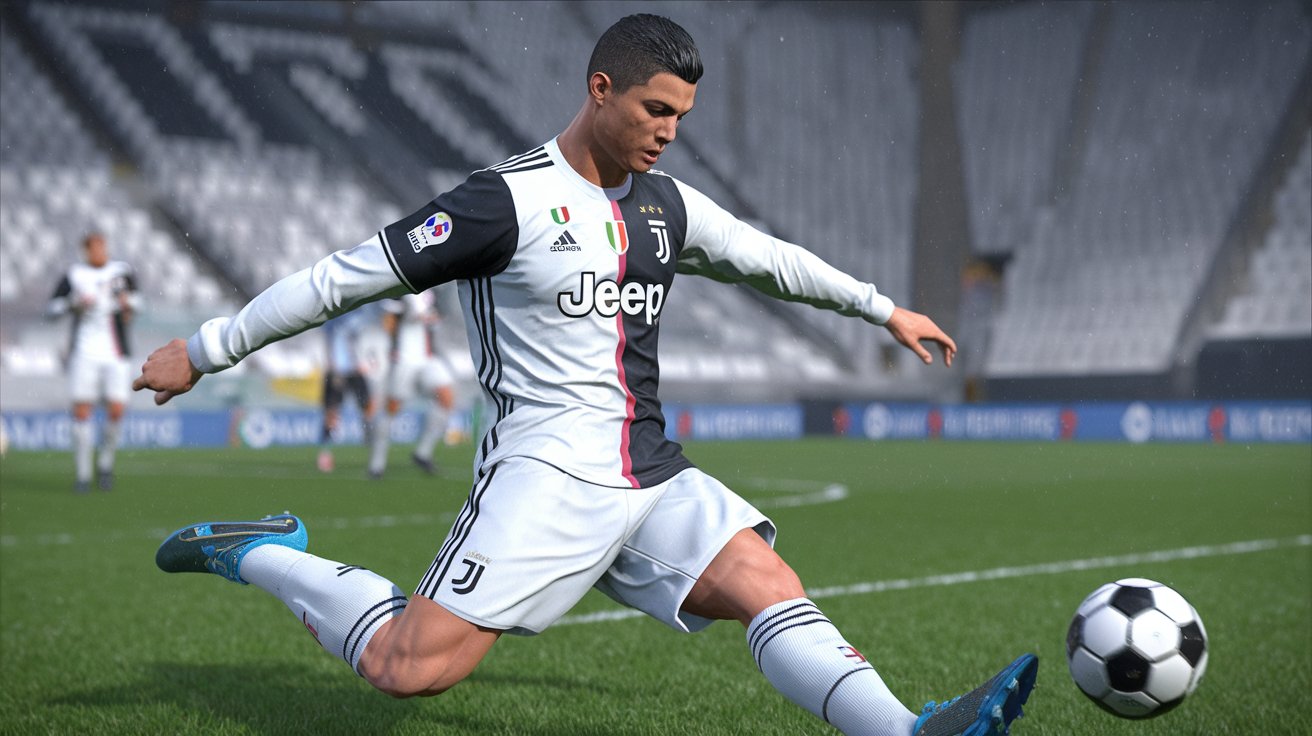
Ronaldo Free Kick Stance: Master CR7’s Iconic Technique
Cristiano Ronaldo’s free kick stance has become one of the most recognizable and studied techniques in modern football. The Portuguese superstar’s unique approach combines precise positioning, distinctive body language, and the famous knuckleball technique that has produced spectacular goals throughout his career. Understanding Ronaldo’s free kick stance reveals the science behind his powerful and unpredictable shots that have mesmerized fans and goalkeepers worldwide for over two decades.
The Evolution of Ronaldo’s Free Kick Mastery
Since his early days at Manchester United, Ronaldo’s free kick technique has undergone significant evolution. During his 2003-2009 stint with the Red Devils, young Cristiano developed the foundation of his signature approach, learning from free kick specialists like David Beckham. His free kick success rate peaked during his first Real Madrid years (2009-2014), when he scored 32 free kick goals out of 324 attempts, achieving an impressive 9.9% conversion rate.
The distinctive Ronaldo free kick stance became globally recognized around 2008-2010, coinciding with his Ballon d’Or victories. His approach differs significantly from traditional free kick takers, incorporating elements of power, unpredictability, and psychological intimidation. While his recent conversion rates have declined to approximately 4-5% since 2018, his technique remains influential, inspiring countless players to adopt similar free kick positioning strategies across professional and amateur levels.
Deconstructing Ronaldo’s Signature Free Kick Stance
The iconic Ronaldo free kick stance begins with his precise positioning behind the ball, typically 6-8 yards away from his target. His signature wide leg spread creates a stable base, with feet positioned wider than shoulder-width apart. This stance positioning allows for maximum power transfer while maintaining balance during the crucial striking moment. His torso remains upright, chest out, projecting confidence and intimidating opposing goalkeepers before the actual kick.
The Pre-Kick Ritual and Positioning
Before executing his free kick technique, Ronaldo performs a meticulous ritual that has become legendary. He places the ball precisely, adjusting it multiple times to ensure perfect positioning. His pre-kick stance includes the famous deep breathing, hands on hips pose, followed by stepping back while maintaining intense focus on the target. This ritual serves both psychological and technical purposes, allowing him to visualize the trajectory while putting additional pressure on the goalkeeper.
Body Alignment and Weight Distribution
The technical brilliance of Ronaldo’s free kick stance lies in his precise body alignment. His supporting foot plants firmly beside the ball, while his striking foot approaches at a specific angle to generate the knuckleball effect. Weight distribution remains crucial, with approximately 60% on his supporting leg and 40% on his striking leg during the approach. This weight distribution technique enables the explosive power transfer necessary for his signature long-range shots, particularly effective from 25-30 yard distances.
The Science Behind Ronaldo’s Knuckleball Technique
The Ronaldo knuckleball free kick represents a masterpiece of physics applied to football. This technique eliminates ball spin, causing unpredictable flight patterns that confuse goalkeepers. Studies conducted by sports scientists in 2024 reveal that Ronaldo’s knuckleball shots can deviate up to 2 meters from their expected trajectory, making them nearly impossible to predict. The knuckleball effect occurs when the ball travels through air turbulence without rotation, creating erratic movement similar to a butterfly’s flight pattern.
Technical analysis shows that successful knuckleball free kicks require striking the ball’s center with the inside part of the foot, using minimal follow-through to prevent spin. Ronaldo’s technique generates ball speeds averaging 80-85 mph while maintaining zero rotation for the first 15-20 yards of flight. This combination of power and precision has made his free kick style one of the most studied techniques in modern football, with biomechanical research conducted at universities across the United States confirming its effectiveness.
Step-by-Step Breakdown of Ronaldo’s Free Kick Execution
Mastering Ronaldo’s free kick technique requires understanding each phase of his execution process. The complete sequence involves precise timing, specific body movements, and mental preparation that has been refined over two decades of professional football. Each element contributes to the overall effectiveness of his free kick approach, from initial positioning to final follow-through.
The Approach Run and Timing
Ronaldo’s approach run follows a consistent pattern, beginning with 5-6 measured steps backward from the ball. His run-up technique accelerates gradually, maintaining controlled rhythm rather than explosive speed. The final three steps are crucial, with his penultimate step being the longest, allowing for optimal body positioning during ball contact. This approach timing ensures maximum power generation while maintaining accuracy, a combination that has produced over 60 career free kick goals as of 2024.
Ball Contact and Follow-Through
The moment of ball contact in Ronaldo’s free kick technique occurs with his foot positioned perpendicular to the ground, striking through the ball’s center with the inside of his right foot. His follow-through remains minimal and controlled, crucial for achieving the knuckleball effect. Unlike traditional free kick techniques that emphasize extensive follow-through, Ronaldo’s method focuses on clean, precise contact that eliminates ball rotation and maximizes unpredictability.
Ronaldo’s Free Kick Statistics and Career Impact
Throughout his illustrious career, Ronaldo’s free kick record showcases both incredible highs and notable periods of decline. From 2009 to 2014, during his prime Real Madrid years, he maintained a conversion rate exceeding 10%, scoring memorable goals against teams like Portsmouth, Arsenal, and Spain in the 2018 World Cup. His career statistics reveal 63 free kick goals from approximately 900 attempts across all competitions, representing a 7% overall success rate.
Recent analysis of Ronaldo’s free kick performance from 2020-2024 shows a significant decrease in conversion rates, dropping to approximately 3-4% during his Manchester United return and current Al-Nassr stint. Despite this decline, his technique remains influential, with American soccer academies incorporating elements of his free kick stance into their training curricula. His impact extends beyond statistics, having inspired a generation of players to adopt similar approaches to dead ball situations.
Why Ronaldo’s Free Kick Success Rate Declined
The decline in Ronaldo’s free kick effectiveness after 2015 can be attributed to several factors identified by sports analysts and biomechanics experts. Age-related changes in muscle power and flexibility have affected his ability to generate the same explosive force, while opposing goalkeepers have become increasingly familiar with his knuckleball technique. Modern goalkeeper training now specifically addresses unpredictable ball flight patterns, reducing the element of surprise that once made his free kicks nearly unstoppable.
Additionally, tactical changes in football have influenced free kick success rates across the sport. Teams now position defensive walls more strategically, and players within walls have developed techniques to disrupt shooting angles. Despite these challenges, Ronaldo’s free kick stance and technique remain technically sound, occasionally producing spectacular goals that remind football fans of his enduring quality in dead ball situations.
Learning Ronaldo’s Free Kick Technique: Training Methods
Mastering Ronaldo’s free kick stance requires dedicated practice and proper technique development. American soccer training programs have developed specific drills focusing on body positioning, ball contact, and the knuckleball effect. The key elements include consistent practice of the wide-legged stance, developing core strength for stability, and perfecting the striking technique that eliminates ball spin.
Essential Training Drills and Exercises
Effective free kick training begins with stance repetition exercises, practicing the wide-legged positioning for 30-45 minutes daily. Players should focus on striking the ball’s center with the inside of their foot, emphasizing clean contact over power initially. Knuckleball training progresses from stationary ball practice to full run-up execution, with coaches monitoring ball rotation and flight patterns to ensure proper technique development.
Mental Preparation and Visualization
The psychological aspect of Ronaldo’s free kick approach includes extensive visualization and mental preparation techniques. His pre-kick ritual serves as a focusing mechanism, allowing for target visualization and confidence building. Training programs now incorporate mental conditioning exercises, teaching players to develop their own pre-kick routines that enhance concentration and reduce pressure during crucial moments.
Comparing Ronaldo’s Technique to Other Free Kick Masters
While Ronaldo’s free kick stance is unique, comparing it to other legendary free kick takers provides valuable insights into different approaches to dead ball situations. Unlike David Beckham’s curved shots or Roberto Carlos’s powerful drives, Ronaldo’s technique emphasizes unpredictability through the knuckleball effect. His stance differs significantly from traditional approaches, incorporating wider leg positioning and minimal follow-through compared to conventional free kick techniques taught in most soccer academies.
Modern free kick specialists like Lionel Messi employ different strategies, favoring placement and curve over power and unpredictability. Ronaldo’s approach remains distinct in its combination of psychological intimidation, technical precision, and physical power. This unique blend has influenced contemporary players worldwide, with many adopting elements of his stance and preparation routine while adapting the technique to their individual strengths and playing styles.
Related video about ronaldo free kick stance
This video complements the article information with a practical visual demonstration.
Most asked questions about ronaldo free kick stance
What makes Ronaldo’s free kick stance so distinctive?
Ronaldo’s free kick stance features an unusually wide leg spread, typically wider than shoulder-width apart, creating maximum stability and power generation. His upright posture, hands-on-hips pre-kick ritual, and precise ball positioning 6-8 yards away create a psychological advantage while enabling his signature knuckleball technique that eliminates ball spin for unpredictable flight patterns.
Why does Ronaldo stand with his legs so wide apart?
The wide-legged stance provides optimal weight distribution and stability during the striking motion. This positioning allows Ronaldo to generate maximum power while maintaining balance, essential for his knuckleball technique. The wider base also enables better control during the approach and striking phase, contributing to the precision required for effective free kick execution.
How do you perform Ronaldo’s knuckleball free kick technique?
To execute Ronaldo’s knuckleball technique, strike the ball’s center with the inside of your foot, using minimal follow-through to prevent spin. The key is clean contact without ball rotation, approached with a controlled run-up and wide stance positioning. Practice requires focusing on consistent ball contact point and eliminating any spinning motion that would disrupt the knuckleball effect.
Why did Ronaldo’s free kick success rate decline after 2015?
Ronaldo’s free kick decline results from multiple factors including age-related physical changes affecting power generation, improved goalkeeper training specifically addressing knuckleball techniques, and tactical evolution in defensive wall positioning. Modern goalkeepers study his technique extensively, reducing the element of surprise that previously made his free kicks highly effective.
What is Ronaldo’s career free kick conversion rate?
Ronaldo has scored approximately 63 free kick goals from around 900 attempts throughout his career, representing a 7% overall conversion rate. His peak period (2009-2014) saw conversion rates exceeding 10%, while recent years (2020-2024) show rates declining to 3-4% due to various factors including age and improved goalkeeper preparation against his technique.
Can amateur players successfully learn Ronaldo’s free kick technique?
Amateur players can learn elements of Ronaldo’s technique through dedicated practice focusing on stance positioning, ball contact, and mental preparation. However, achieving his level of effectiveness requires exceptional physical conditioning, consistent training, and natural ability. Most players benefit from adapting his positioning concepts while developing their own style suited to their individual strengths and limitations.
| Technique Element | Ronaldo’s Approach | Key Advantage |
|---|---|---|
| Stance Width | Wider than shoulder-width | Maximum stability and power |
| Ball Contact | Center strike with inside foot | Knuckleball effect creation |
| Pre-kick Ritual | Breathing and positioning routine | Mental focus and intimidation |
| Follow-through | Minimal and controlled | Prevents unwanted ball spin |
| Career Success | 63 goals from 900+ attempts | 7% conversion rate overall |